How to Remove Pet Hair From Carpet: Simple Methods That Work
We may earn a commission from affiliate links to products on this page, at no additional cost to you. Learn more
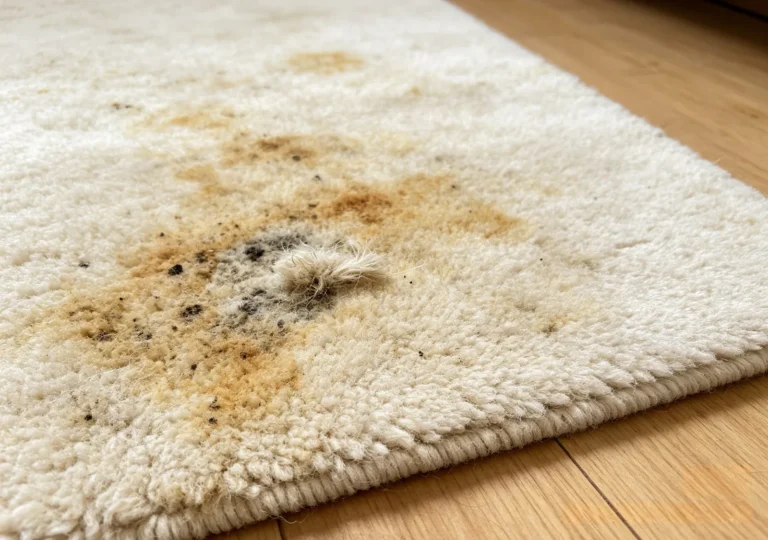
Ollie is lying on the living room carpet, soaking up the sun, while my baby plays beside him. Watching them makes me happy. But the moment Ollie gets up, I can’t believe my eyes—wasn’t that carpet looking pretty clean just a moment ago? And now there’s another layer of dog hair on it? Oh my gosh, now he’s running over to snuggle up to me—and my pajamas…
Have you ever had this happen to you? His fur is such a pain to clean up! Even a vacuum often struggles to get it out, because the hair doesn’t just sit on the surface—a lot of it works its way between the carpet fibers. I’ve tried so many different ways to clean up the mess he leaves behind, and all that effort finally paid off. I figured out how to remove pet hair from carpet with just a few affordable tools and some DIY methods.
How to Remove Pet Hair From Carpet
🧹 Quick Everyday Pet Hair Removal From Carpet
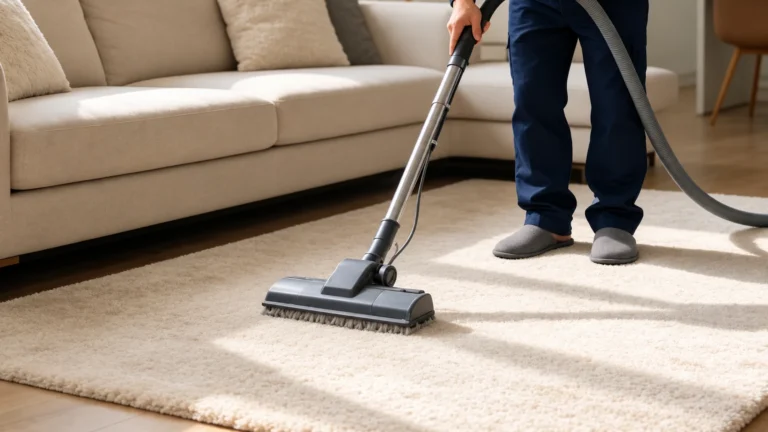
Cleaning up small amounts of pet hair on a regular basis doesn’t have to take much time. If you have a vacuum handy, you can use it. If not, a pair of rubber gloves, a carpet rake, or even a window squeegee you already have at home can come in handy.
1. Rubber Gloves and Electrostatic Brushes
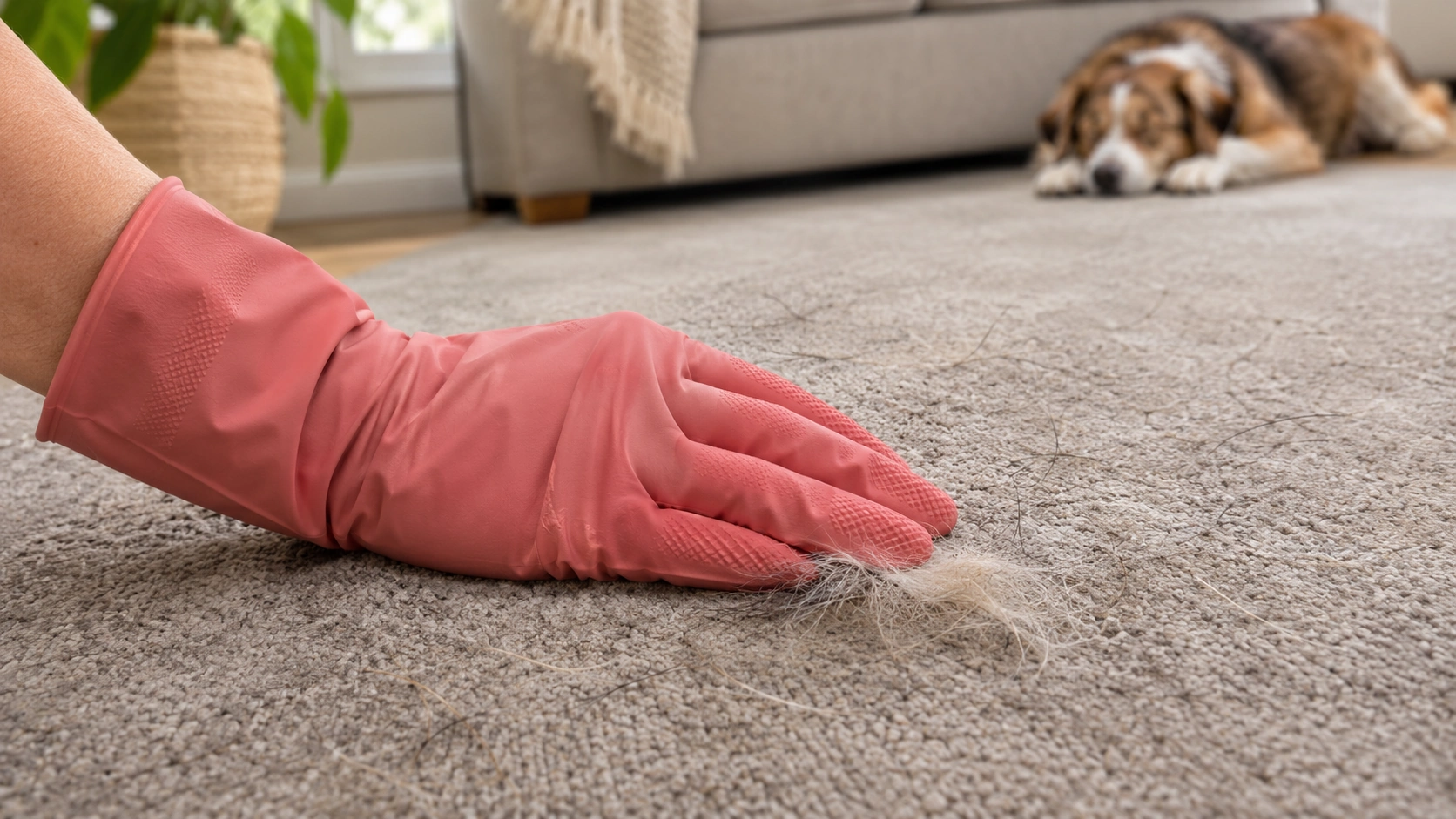
Hey, did you know that the rubber gloves you use for washing dishes can actually do a great job of picking up pet hair? That’s because rubbing rubber against fabric or hair can generate static electricity. Put on the gloves and gently rub the carpet in one direction. The static helps attract hair on the carpet’s surface, and the loose hairs gradually gather into little clumps. Then just pick them up and toss them out.
Slightly dampening the gloves can sometimes help collect hair, too, but first make sure your carpet is suitable for this method. You can also try a soft electrostatic brush. Gloves are especially handy for stairs and corners.
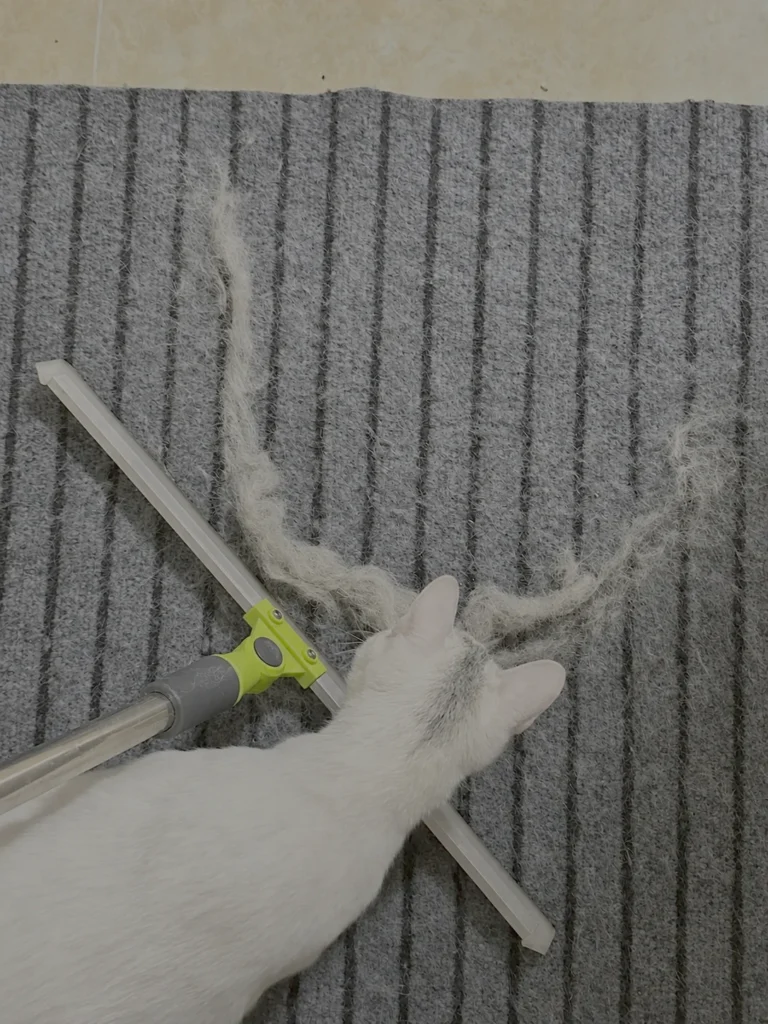
2. Rubber Brooms, Silicone Scrapers, and Window Squeegees
Many people use these tools to remove pet hair from carpets. They can be somewhat effective on carpets with shorter pile, but they don’t work as well on high-pile carpets.
3. Long-Handled Lint Rollers and Reusable Pet Hair Rollers
If there’s just a little loose hair on the carpet, a few passes with a lint roller can help. It’s especially handy for low-pile carpets, doormats, or small areas you want to tidy up quickly. But I don’t like using them this way—the cost really adds up over time.
I usually use a reusable roller with a built-in hair collection compartment. I can use it again and again, so I think it’s worth considering for long-term use.
💡 Tip: When removing pet hair from carpet, start with dry cleaning before using anything wet. Pet hair can clump together when it gets wet, making it harder to remove if you wipe the carpet with a damp cloth right away.
How to Remove Stubborn and Embedded Pet Hair From Carpet
Hair on the surface of the carpet is easy to remove. The real trouble is pet hair that’s worked its way deep into the carpet fibers or become tangled in the pile. The challenge is getting that hair out without damaging the carpet’s surface. Here are a few little tricks I hope will help you tackle the problem.
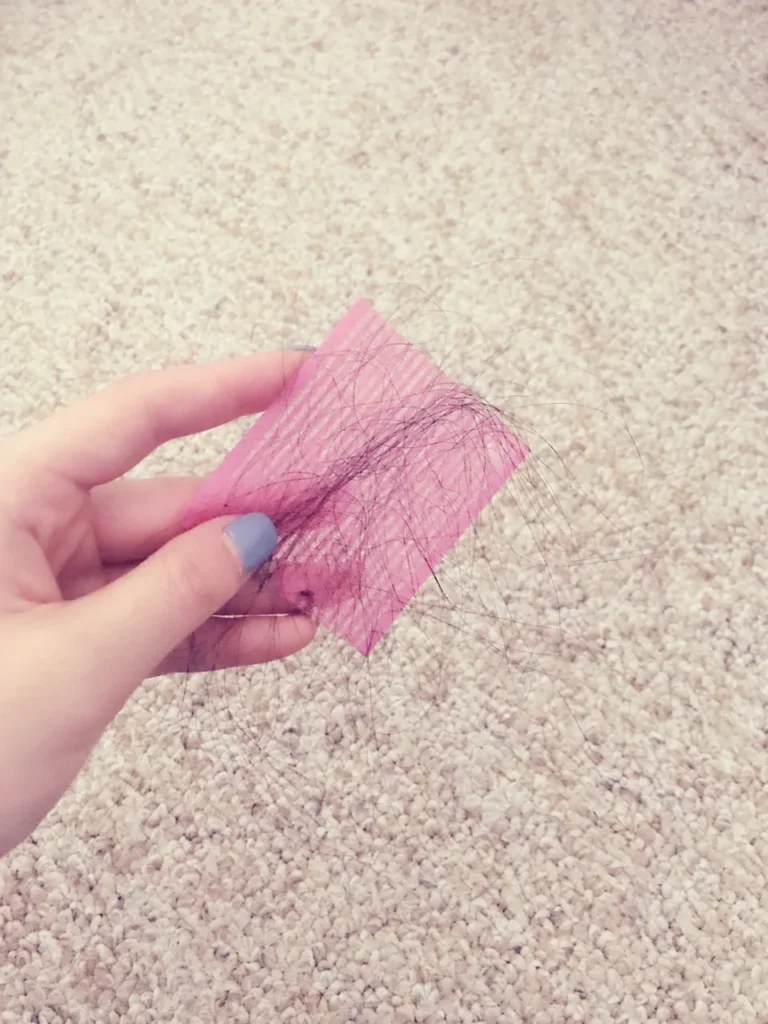
1. Ever used those Velcro hair gripper pads for bangs? Yep, those! They’re a simple way to remove hair that’s already embedded in the carpet. I’d recommend using them with caution on new carpets or carpets made from specialty materials, but they’re worth a try on ordinary, older carpets. Brush in one direction, following the carpet’s pile, and a lot of the hair will come out.
2. Long-Handled Carpet Rake — Give This Handy Little Wonder a Try and Bend Over Less! Unlike a regular rubber broom, its specially designed teeth can help pull out pet hair tangled in the carpet pile. Hold the long handle and gently pull the rake in one direction, following the carpet’s pile. Once the hair gathers together, collect it and remove it. It’s especially handy for cleaning large carpeted areas like the living room.
Tip: Be especially careful when choosing cleaning tools for wool, silk, loop-pile, and high-pile carpets. For wool carpets, consider using a suction-only vacuum first. With loop-pile and high-pile carpets, watch out for rotating brush rolls that could snag or tangle the fibers. As for popular online methods like pumice stones and metal pet hair scrapers, some people use them to remove stubborn hair, but the rubbing and scraping can also damage carpets, especially delicate natural-fiber carpets.
If there’s still an odor after you’ve removed the pet hair from your carpet, check out How to Clean Vomit From Carpet: Remove Stains and Odors. For more carpet-cleaning tips, see How to Clean Carpet at Home: 4 Proven Methods.
How to Reduce Pet Hair Buildup in Carpet
If you want less pet hair to clean off your carpet, brush your adorable fur babies more often. They usually enjoy it, too. Especially during shedding season, increase how often you brush them as needed, depending on how much they’re shedding. You can also place an easy-to-wash small blanket or mat in the spots where your pets often lie down. For everyday cleaning, you can focus on these areas.
Tip: Increased shedding during shedding season is usually normal. However, the American Society for the Prevention of Cruelty to Animals (ASPCA) advises consulting a veterinarian if your pet suddenly starts shedding excessively or develops bald patches, skin redness, itching, or frequent scratching. These symptoms may indicate a skin condition or another health problem.