How to Wash a Sleeping Bag and Keep It Fluffy
We may earn a commission from affiliate links to products on this page, at no additional cost to you. Learn more
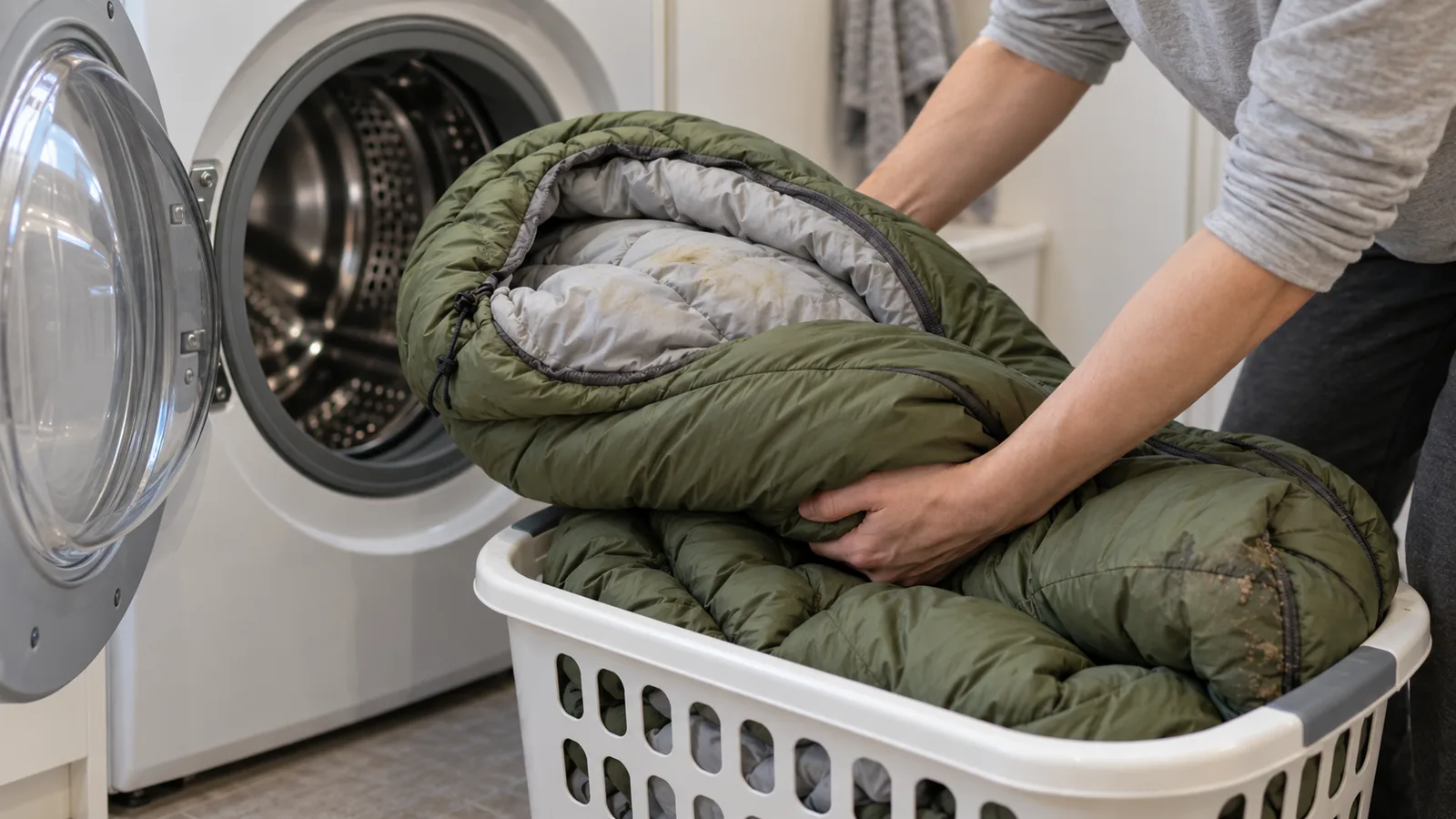
Sleeping bags are usually used outdoors, so they tend to get dirty faster. But different sleeping bag materials require different washing methods, and washing a sleeping bag the wrong way can affect how well it keeps you warm. If you’re wondering how to wash a sleeping bag, check the manufacturer’s care label first, then use the methods below.
Does Your Sleeping Bag Need a Full Wash?
Before deciding how to clean a sleeping bag, check where it is dirty. If it is only dirty around the collar, hood, or foot area—the spots that touch your skin and tend to collect sweat and skin oils—use a clean, soft cloth with a little mild cleaner to wipe away the stains. Then use another soft cloth dampened with clean water to remove any residue, repeating if needed. As you wipe, try to keep the fabric apart from the filling so water does not soak through. Do not put the bag away until the cleaned area and any filling that got wet are completely dry.
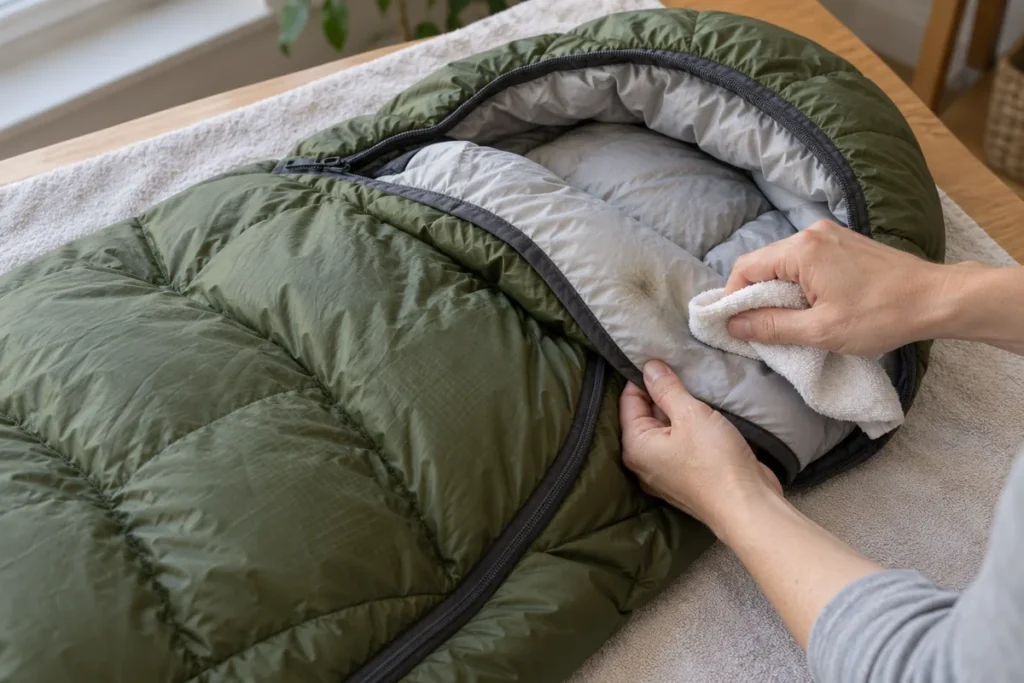
If the sleeping bag smells sweaty or feels damp after a trip, that does not necessarily mean it is dirty. Unzip it, turn it inside out, and let it air out somewhere shaded and well ventilated. If the smell goes away and there are no obvious stains or other reasons to clean it, there is no need to wash the whole bag yet.
When should you think about washing the whole sleeping bag? If it looks dirty all over, the odor remains even after airing it out, the loft has dropped, and the filling feels uneven, it may be time for a full wash.
There is no single schedule for washing sleeping bags. A bag used frequently, especially in damp conditions, will not necessarily need the same washing frequency as one used only occasionally.
Before You Wash: Check the Label and Get Ready
To figure out how to wash a sleeping bag, start with the care label. It is usually inside the sleeping bag, near the zipper, or around the foot area. Look for whether machine washing is allowed, the recommended water temperature, and whether tumble drying is permitted. The label can usually answer the question, “Can you wash a sleeping bag?”
What Cleaner Should You Use for a Sleeping Bag?
Wondering how to wash a down sleeping bag? Use a specialized down wash (down cleaner) for down-filled sleeping bags. For synthetic-filled sleeping bags, use a tech wash (technical fabric cleaner) or a cleaner specifically designed for synthetic insulation.
A few things to keep in mind:
1. Do not use too much of any cleaner or skimp on rinsing. Even a specialist cleaner can leave residue and affect loft. Follow the dosage instructions.
2. Do not use fabric softener or bleach.
3. If a sleeping bag is particularly expensive or has special cleaning requirements, consider using a professional sleeping bag cleaning service.
How Do You Wash a Sleeping Bag?
How do you clean sleeping bags? There are basically three methods: machine washing, hand washing, and dry cleaning. For dry cleaning, follow the product’s care instructions.
How to Machine Wash a Sleeping Bag
Check the care label first to make sure machine washing is allowed.
Use different cleaning agents depending on the material of the sleeping bag. If it’s a down sleeping bag, choose the mode on the washing machine specifically designed to clean down products. If this mode is not available, you can choose the gentle mode. It is recommended not to spin at a very high speed.
How to Hand Wash a Sleeping Bag in a Bathtub
If you do not have a suitable washing machine, or the brand requires hand washing, a bathtub will do.
What you need
First, choose a specialized cleaner suited to the sleeping bag’s material. Some guides suggest using soap, but it’s generally not recommended because it may affect the sleeping bag’s insulating performance.
A soft-bristled brush; warm water, preferably around 30°C. Water that is too hot can damage down.
Steps: Add the appropriate amount of cleaner to warm water, soak the sleeping bag for 15 minutes to loosen dirt, and gently rub or brush stained areas such as the collar a few times before rinsing.

Tip:
1. The most important things when hand washing a sleeping bag are rinsing and removing water. I suggest rinsing several times until there are no more suds. Do not wring it out or grab one corner and pull it up while it is hanging, especially when washing a goose down sleeping bag, as this can damage the down structure. Instead, after changing the water, press gently to squeeze the water out.
How to Dry a Sleeping Bag Completely
The key to drying a sleeping bag completely is making sure the filling is dry, even when the outside already feels dry.
A tumble dryer is a good option. First check whether the care label allows tumble drying, and make sure to use low heat.
When the outside feels dry, lay the sleeping bag flat, pat it gently, and keep airing it out. Repeat this a few times.
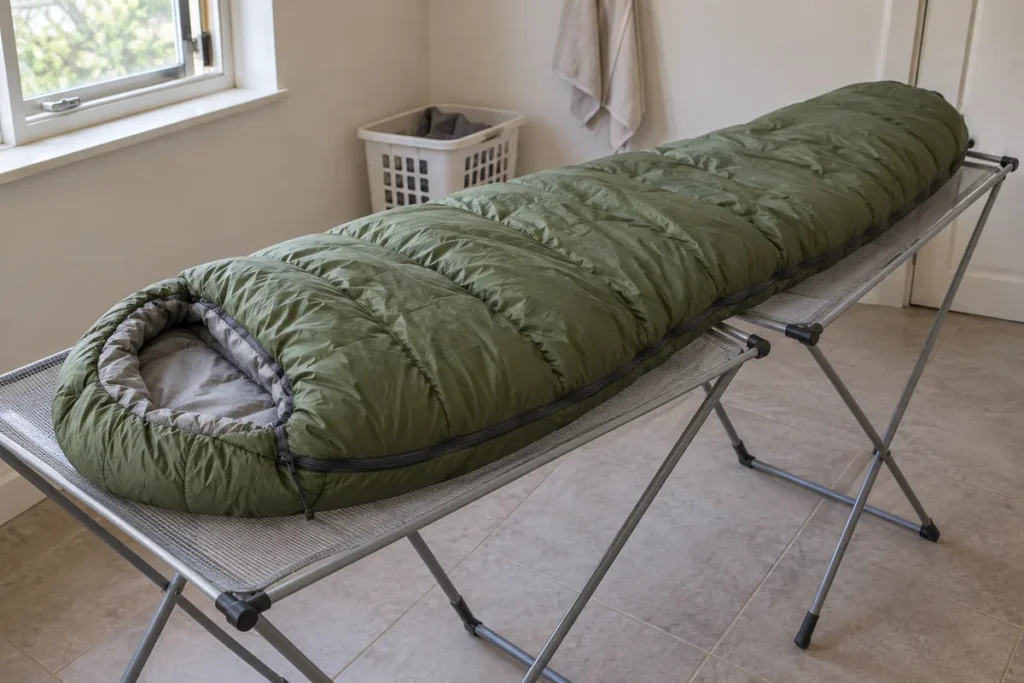
I would not recommend leaving a down sleeping bag in direct sunlight, because it can age the fabric.
How to Tell Whether the Fill Is Dry
The fill needs to be completely dry before you put the sleeping bag away. If it stays damp inside for too long, mold and unpleasant odors can develop.
To judge whether the fill is dry, give the bag a gentle squeeze and press. If it feels fluffy, dry, and light, and it springs back, you can be reasonably confident that the inside has dried.
Lean in and give it a sniff, too. A damp sleeping bag smells different from a dry one.
Why Is the Down Still Clumpy, and What Can You Do?
After washing a down sleeping bag, the down inside often clumps because it has not dried all the way, still holds moisture, or was dried the wrong way.
Leave the sleeping bag in a well-ventilated area for a few more days. If the down is still clumped together, you can use a hair dryer while gently patting the bag. Avoid hot air, and don’t aim the dryer directly at the fabric surface. Use cool air or a low-to-medium warm setting instead.
A tumble dryer is another good option, as long as you use a low-heat setting.
For other methods, check the manufacturer’s instructions.
Keeping Your Sleeping Bag Clean Between Trips
Keeping a sleeping bag clean is not easy, especially when its outer surface is exposed outdoors and easily picks up dirt and dust. Try placing an easy-to-clean layer beneath the sleeping bag when you use it. As for the inside, wear clean clothes when you get into the bag. Of course, on particularly cold outdoor trips, staying warm comes first, and wearing a down jacket to sleep will certainly keep you a little warmer.
A sleeping bag liner is also a good way to keep the inside cleaner, but choose one that is easy to wash. For help choosing a sleeping bag liner, see Best Sleeping Bag Liners.
Air the bag out after every use. When you get home, unzip it, turn it inside out, and leave it in the shade to air out so moisture and odors can gradually dissipate. Spot-clean dirty areas promptly, and let them dry before storing the bag.
Sleeping Bag Washing FAQ
How Often Should You Wash a Sleeping Bag?
After every use, take a look at how dirty the sleeping bag is. If it looks really dirty, it is time to wash it. Smaller stains can be spot-cleaned. If there is an odor, try airing the bag out first.
Can You Use Regular Laundry Detergent?
I recommend using a specialist cleaner first. If the care label for a particular sleeping bag does not have strict requirements, you can use a mild laundry detergent.
Should You Wash a Sleeping Bag Zipped or Unzipped?
Different brands recommend different things here. I usually wash mine with the zipper open.
Can You Dry Clean a Sleeping Bag?
Most brands explicitly advise against dry cleaning. If the care label states that dry cleaning is allowed, follow the label’s instructions.