What Is a Rotomolded Cooler? Is It Worth the Extra Cost?
We may earn a commission from affiliate links to products on this page, at no additional cost to you. Learn more
The little ones get so excited during outdoor activities, but fresh, healthy food is what fuels all that energy. Watching them happily enjoy something delicious is such a wonderful sight. That’s why a cooler makes a great addition to your outdoor gear.
But there are so many coolers on the market. When shopping for one, I’d suggest taking a closer look at rotomolded coolers. Their shells tend to be sturdier and better able to withstand bumps and knocks. Many models also feature thicker insulation and well-designed seals that help keep food and drinks cold longer.
Of course, rotomolded coolers also tend to cost more and weigh more. Regular hard coolers can keep things cold, too, so why consider a rotomolded one? Is paying extra really worth it? I think it’s better to understand the differences first, then decide which one is the better fit for your needs.
What Is a Rotomolded Cooler? How Is It Different from a Regular Hard Cooler?
What It Is and Why It Costs More
Simply put, the shell of a rotomolded cooler is formed as a single piece using a heated, rotating mold, making it generally sturdier and more durable. However, because the manufacturing process takes more time, these coolers tend to cost more.
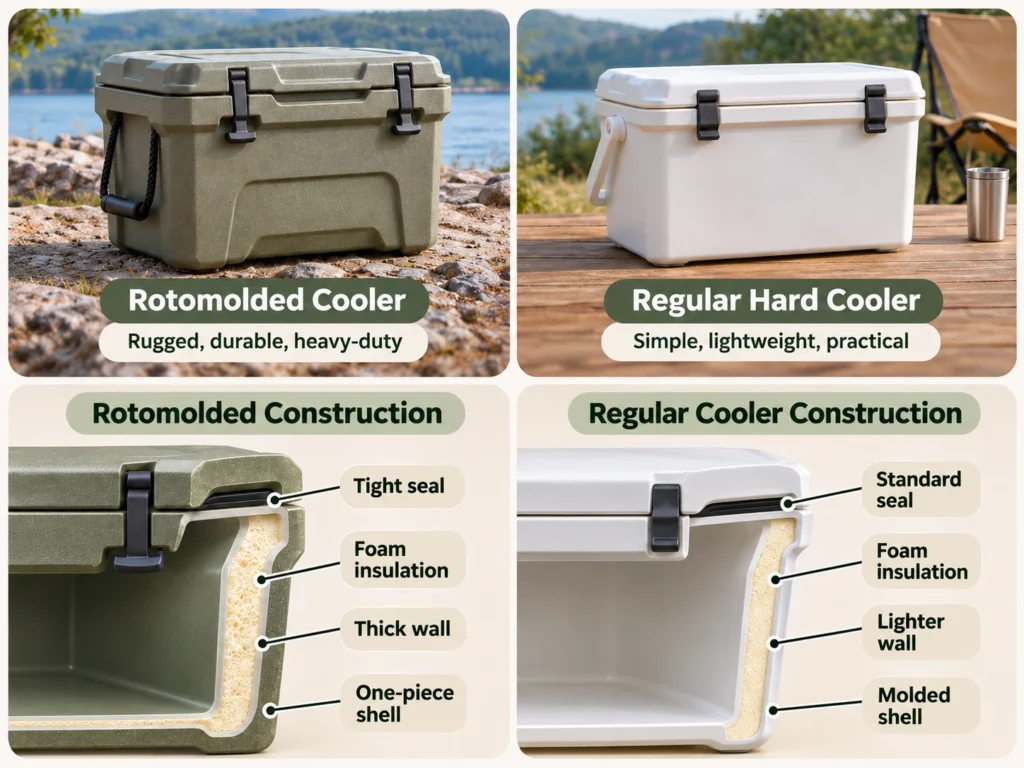
Rotomolded Coolers vs. Regular Hard Coolers
| Key Features | Rotomolded Cooler | Regular Hard Cooler |
|---|---|---|
| Manufacturing Process | One-piece body formed by rotational molding | Usually injection-molded or blow-molded |
| Build & Durability | Rugged construction, generally more impact-resistant | Durability varies by model and design |
| Insulation Design | Often features thick foam insulation and lid gaskets | Can also use foam insulation and lid seals |
| Ice Retention | Can keep ice longer, depending on the model and design | High-performance models can also retain ice well |
| Typical Uses | Multi-day camping, fishing, and frequent outdoor trips | Picnics, day trips, and everyday outings |
| Main Drawbacks | Often heavier and more expensive; thick walls may reduce usable space | Some entry-level models have less rugged construction and weaker insulation |
How to Choose a Rotomolded Cooler: What to Consider
1. Choose a Rotomolded Cooler Based on Your Activities and Cooling Needs
For everyday family outdoor activities, you may only need to keep food fresh for a few hours or throughout the day. An affordable, easy-to-carry cooler should be enough.
Tip: Try not to open the lid too often. Place the food or drinks you’ll use first on top for easy access.
Long road trips or camping for several days often mean bringing more food and needing to keep it cold for longer. Before buying a cooler, I think it’s worth considering a few things.
- How long you need to keep things cold: On multi-day outdoor trips, you can replenish the ice along the way when possible. When choosing a cooler, pay particular attention to how long it can keep things cold if you can’t get more ice.
- Choosing a cooling source: If you’re bringing a lot of food, you can use appropriately sized hard-sided ice packs, which are easy to arrange neatly. If there’s enough space, you can also use frozen bottles of drinking water. Once the water thaws, you can drink it.
- Which foods need refrigeration: Perishable foods such as seafood, meat, and dairy products need extra attention, and you can plan to eat them earlier in the trip. According to the U.S. Department of Agriculture’s Food Safety and Inspection Service (USDA FSIS), foods that require refrigeration should be kept at 40°F (about 4.4°C) or below.
- How to pack your food: Place the food you’ll need first where it’s easy to reach, so you don’t have to rummage around or leave the lid open for too long. Raw meat, seafood, and similar ingredients should be kept in sealed packaging to avoid contaminating other foods.
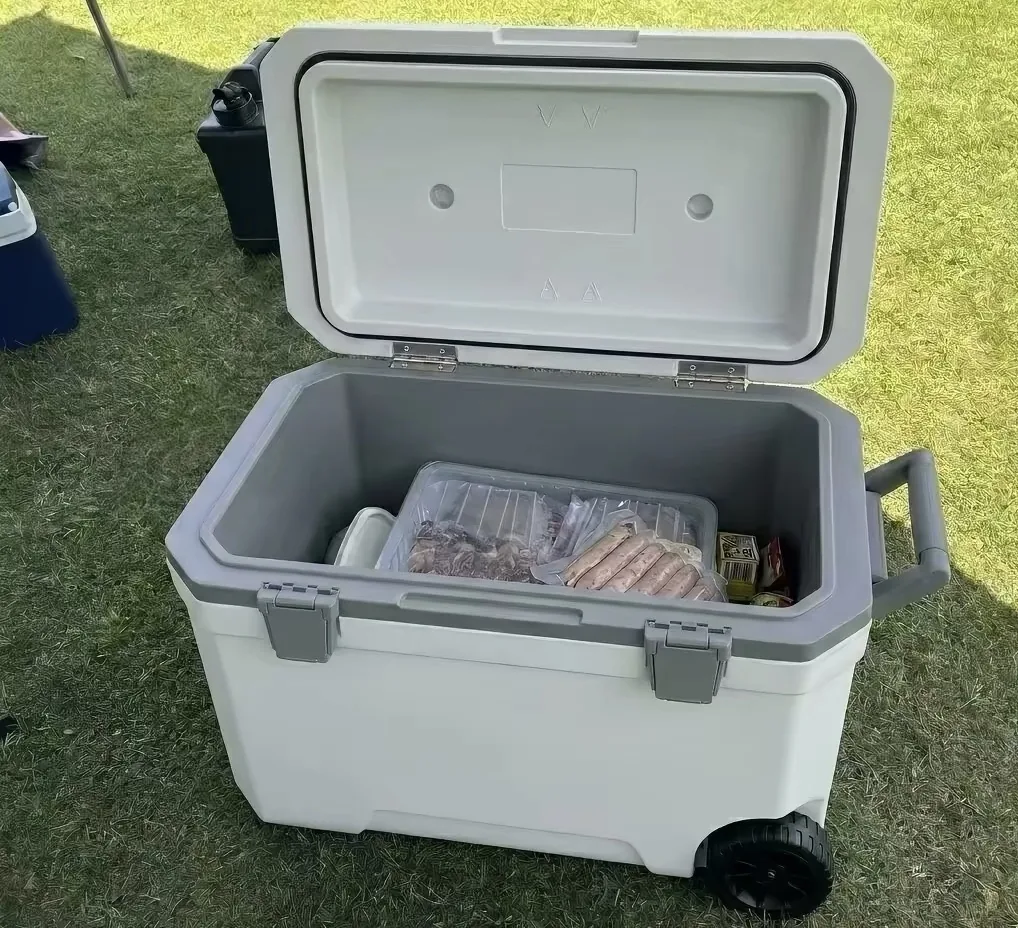
- Moving the cooler when it’s full: Ice and food together can make the cooler quite heavy. If you need to move it frequently, you can prioritize a rotomolded cooler with wheels, while making sure the wheels are suitable for the terrain.
Tip: Pre-chill the cooler before you leave, and refrigerate or freeze your food ahead of time. This way, the ice won’t have to cool down a large amount of room-temperature food.
2. What Size Rotomolded Cooler Should You Choose? Don’t Overlook Interior Space
Rotomolded coolers typically have thicker walls and a slightly bulkier exterior, so be sure to consider the actual interior space when choosing a size. Choose a cooler based on the number of people in your group. For two to three people, I’d recommend a cooler with a capacity of around 42 quarts (40 liters). But the right size also depends on how much food and ice you plan to bring.
3. Check the Cooler Shell Materials and Internal Insulation
- Outer Shell: Look for a one-piece rotomolded shell made from polyethylene materials such as LLDPE or HDPE. Before buying, check the corners and edges for cracks, warping, or visible manufacturing defects.
- Inner Liner: Common liner materials include PE and PP. If you often store fruit, seafood, or ice for consumption, especially when food comes into direct contact with the liner, pay attention to the material’s food-contact safety.
- Insulation Filling: For multi-day camping or long trips, I recommend choosing a cooler with PU (polyurethane) foam insulation. It provides better thermal insulation.
- Insulation Thickness: For short camping trips, you can use at least 30 mm (1.2 inches) of insulation in the walls and 40 mm (1.6 inches) in the lid as a reference. If you frequently go on multi-day camping trips where replenishing ice is difficult, consider models with thicker insulation.
4. Rotomolded Cooler Hardware and Practical Features
When buying a rotomolded cooler, be sure to check the lid gasket to see if it seals tightly all the way around when the lid is closed. The latches should be sturdy, and you should also check the hinges and other metal hardware for corrosion resistance. Finally, don’t forget the drain valve at the bottom of the cooler. It’s a very practical feature that makes it easy to drain water from melted ice and clean the cooler.
If you camp often, enjoy outdoor activities, or travel with a group, a sturdy, durable rotomolded cooler that reliably keeps things cold is worth considering.
For more outdoor guides, check out Best Backpacking Sleeping Bags of 2026: Top Picks for Every Budget, Best Sleeping Bags for Cold Weather and Winter Camping, and Best Portable Power Stations: 10 Picks for Home Backup, Camping & More.