EcoFlow DELTA 3 vs. DELTA 3 Classic: Which Portable Power Station Is Right for You?
We may earn a commission from affiliate links to products on this page, at no additional cost to you. Learn more
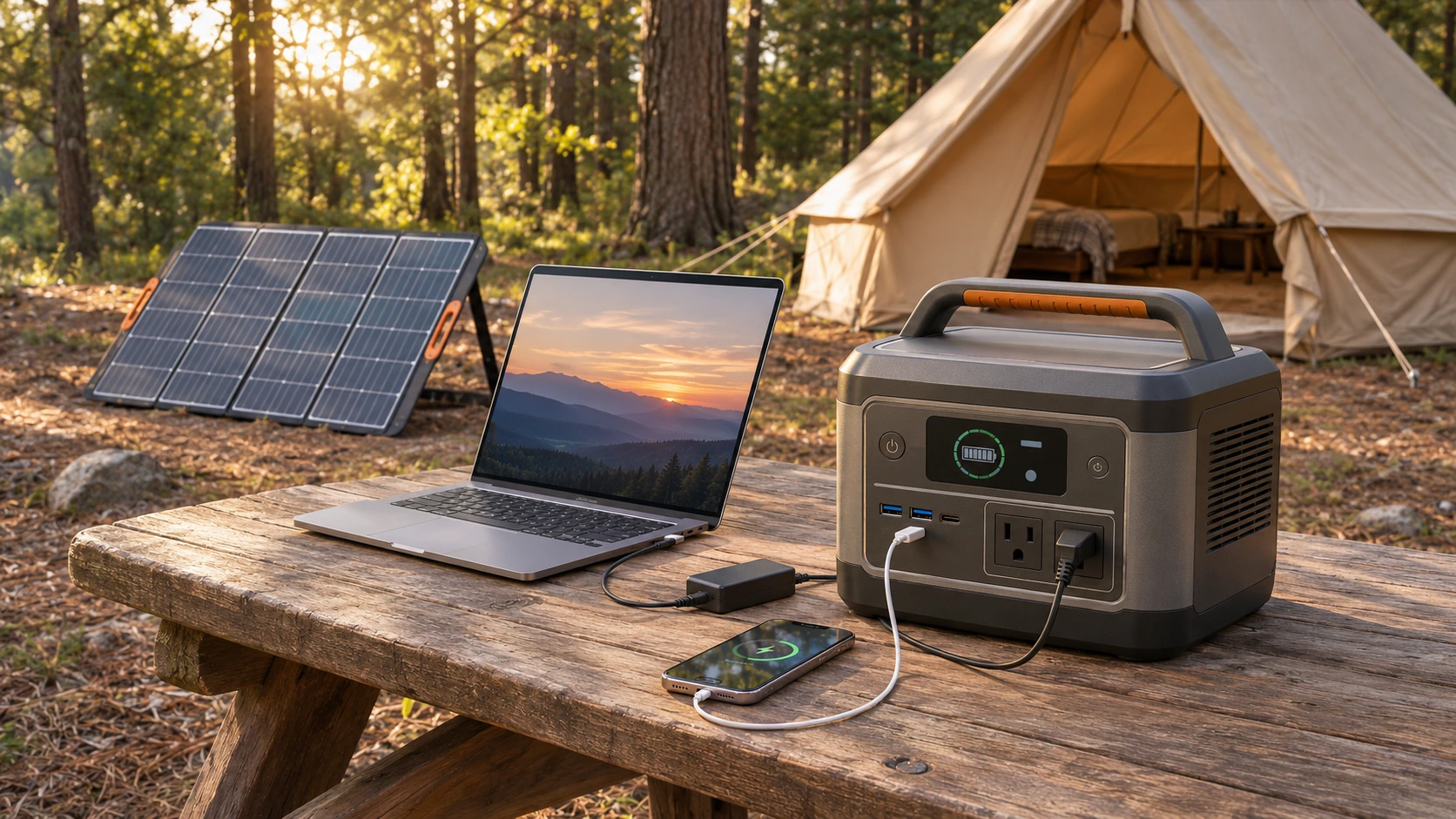
The EcoFlow DELTA 3 Classic Portable Power Station and the EcoFlow DELTA 3 Portable Power Station both offer mid-range power output. Both are well suited for short-term home backup during power outages, car camping, outdoor power needs, and charging electronic devices such as smartphones and laptops.
Although they have the same battery capacity and continuous power output, they differ significantly in their port configurations, expandability, and ease of use. So, which of these two is the best portable power station for you? We’ll use the comparison table and different use cases to help you decide.
EcoFlow DELTA 3 vs. DELTA 3 Classic: Side-by-Side Comparison


EcoFlow DELTA 3 Classic Portable Power Station
EcoFlow DELTA 3 Portable Power Station
Comparison Item
EcoFlow DELTA 3 Classic
EcoFlow DELTA 3
Core Specifications
Model Number
EF-DL3-C
EF-DL-H10-3
Battery Chemistry
LFP (LiFePO4)
LFP (LiFePO4)
Battery Capacity
1,024Wh
1,024Wh
Continuous AC Output
1,800W
1,800W
Surge Output
3,600W
3,600W
X-Boost Mode
Up to 2,600W
Up to 2,200W
Inverter Waveform
Pure sine wave
Pure sine wave
AC Output Voltage
120V / 60Hz
120V / 60Hz
Dimensions (L × W × H)
15.6 × 7.8 × 11.2 in.
15.7 × 8.0 × 11.2 in.
Weight
Approx. 26.7 lb
Approx. 27.6 lb
Output Ports
Total Output Ports
6
13
AC Outlets
3
6
USB-A Ports
1 × 18W
2 × 18W
USB-C Ports
1 × 100W + 1 × 30W
2 × 100W
12V Car Outlet
No
Yes, up to 126W DC total
DC5521 Ports
No
2
Charging & Expansion
Max AC Charging Input
1,400W
1,500W
AC Full Charge (0–100%)
Approx. 60 min
Approx. 56 min
Max Solar Input
500W
500W
Solar Full Charge
Approx. 2.5 hrs at 500W
Approx. 2 hrs at 500W
Solar Panel Included
No (station-only version)
No (station-only version)
Car Charging
Supported
Supported
Expansion Battery
Not supported
Supported
Maximum System Capacity
1,024Wh
Up to approx. 5kWh
Battery, Safety & Everyday Features
Battery Life / Cycle Life
Approx. 10-year simulated lifespan
80%+ capacity after 4,000 cycles
Battery Management System
Yes
Yes
Battery Protection
Voltage, current, temperature & short-circuit protection
Voltage, current, temperature & short-circuit protection
UPS Transfer Time
Approx. 10 ms
Less than 10 ms
Optimal Operating Temperature
68–86°F (20–30°C)
68–86°F (20–30°C)
Charging Temperature
32–113°F (0–45°C)
32–113°F (0–45°C)
Discharging Temperature
14–113°F (−10–45°C)
14–113°F (−10–45°C)
Storage Temperature
14–113°F (−10–45°C)
14–113°F (−10–45°C)
Wi-Fi & Bluetooth
Yes
Yes
EcoFlow App Control
Yes
Yes
Storm Guard Mode
Yes
Yes
Smart Generator Auto Start/Stop
No
Yes, with compatible generator
Warranty
3 years + 2 years with app registration
5 years
Best Use Cases
Short-Term Home Backup
Good for essential devices
Good for essential devices
Refrigerator & Router Backup
Suitable within power limits
Suitable within power limits
Car Camping & Outdoor Use
Good for basic power needs
Better for multiple devices
RV Auxiliary Power
AC-powered devices
AC and 12V DC devices
Phones & Laptops
Suitable
Suitable
Power Tools
Within rated output limits
Within rated output limits
Long-Term Expandability
No expansion battery support
Supports extra batteries
Best For
Simple, standalone backup power
More ports and future expansion
Buying Advice
After looking at the specifications above, I think what makes choosing between these two power stations so difficult is that they both have a 1,024Wh battery capacity and 1,800W of continuous AC output. So which one should you choose?
The two models actually have very similar basic power capabilities. What really matters is how many devices you plan to connect, whether you need to use 12V DC appliances, and whether you might want to expand the battery capacity later. I wouldn’t assume the DELTA 3 is right for every household just because it has more ports.
When Is the EcoFlow DELTA 3 Classic the Better Choice?
If, like me, you mainly want to keep a backup power station at home for temporary outages—to power your router, laptop, phone, lights, and a few essential appliances, as well as for weekend outdoor activities—I think the DELTA 3 Classic is worth considering.
It has three AC outlets, one 18W USB-A port, and two USB-C ports rated at 100W and 30W. That setup is usually enough. It also supports up to 500W of solar input and can fully recharge from a household wall outlet in about an hour.
One thing I particularly appreciate is how practical it is. The Classic works as backup power for a home computer and router, and if you occasionally take a road trip and want to power a portable fridge, fan, and lights, it can handle that just fine.
The Classic’s biggest limitation is that it doesn’t support an extra battery.
That’s something I want to point out. Before buying, make sure you’ve considered the fact that you can’t increase its battery capacity. If you need backup power for longer periods, it isn’t the best choice. It also lacks a 12V car outlet and DC5521 ports. If your RV fridge or other devices require these DC ports, you can’t connect them directly to the Classic. However, AC-to-DC power adapters are available, and some portable car fridges come with one. Just check that the voltage, power rating, and connectors are compatible, and buy a suitable adapter if needed.
Even with these limitations, it’s enough to meet my needs during a power outage or an outdoor emergency.
When Should You Choose the EcoFlow DELTA 3?
If you need to connect more devices at once, or you’re planning to use a power station for RV trips, car camping, or a more flexible home backup system, I’d lean toward the standard DELTA 3.
The EcoFlow DELTA 3’s advantages become more obvious here. Well, its biggest “advantage”? You have to pay more. But it should be worth the extra cost.
It has six AC outlets, two USB-C ports rated at up to 100W each, a 12V car outlet, and two DC5521 ports. Just imagine you’re camping: you need to connect a compatible 12V car fridge while also powering your laptop, phone, and lights. Having those extra ports is so convenient.
Here’s another reason it’s worth paying extra: the DELTA 3 supports compatible extra batteries. If 1,024Wh meets your needs now but you may add more home backup devices later, the DELTA 3 gives you room to upgrade. Its total battery capacity can be expanded to around 5kWh, which means you can keep using your devices for the next few hours without worrying about running out of power.
That said, the DELTA 3 isn’t without its limitations.
Let’s start with battery expansion. The main unit supports additional battery capacity, but the extra battery isn’t free—you’ll have to buy it separately. And not just any battery will work. There are specific requirements for the battery model and how it connects.
So, are you really planning to expand the capacity? If so, it’s best to check which battery models are compatible and how much they cost now. Don’t wait until you need more capacity to discover you’ve bought the wrong accessories.
Estimated Runtime for Both Portable Power Stations
I estimated how long these two power stations could run in different situations based on the power consumption of common household appliances and outdoor devices.
|
Devices in Use |
DELTA 3 Classic (No Extra Battery) |
DELTA 3 (No Extra Battery) |
|---|---|---|
|
Laptop (50W) + one phone charge |
Approx. 17 hours |
Approx. 17 hours |
|
Laptop (50W) + router (12W) + one phone charge |
Approx. 13.7 hours |
Approx. 13.7 hours |
|
Household refrigerator (60W average) |
Approx. 14.5 hours |
Approx. 14.5 hours |
|
Refrigerator (60W average) + laptop (50W) + one phone charge |
Approx. 7.7 hours |
Approx. 7.7 hours |
|
TV (80W) + router (12W) + LED lighting (15W) |
Approx. 8.1 hours |
Approx. 8.1 hours |
|
Camping electric cooler (40W average) + fan (35W) + lighting (10W) + one phone charge |
Approx. 10 hours |
Approx. 10 hours |
|
Electric space heater (1,200W) |
Approx. 40–45 minutes |
Approx. 40–45 minutes |
Note: These estimates are based on each unit’s 1,024Wh battery capacity and approximately 85% usable energy, with 20Wh allotted for one phone charge. The refrigerator and electric cooler use example average power consumption figures, not fixed power draw while their compressors are running. These calculations assume a fully charged power station with no additional charging input. They are estimates, not actual test results. Actual runtimes will vary depending on device power consumption, conversion losses, and operating conditions.
After considering the specifications, capabilities, and features of both models, I think the Classic is enough for everyday home backup needs and occasional outdoor use. But if your budget allows, I’d still recommend the DELTA 3. After all, its additional ports and the option to expand the battery capacity later make it better suited to a wider range of needs.
Of course, if you’d like to explore other capacities, brands, and options for different uses, you can check out my guide, Best Portable Power Stations: 10 Picks for Home Backup, Camping & More.