Best Sleeping Bags for Cold Weather and Winter Camping
We may earn a commission from affiliate links to products on this page, at no additional cost to you. Learn more
Introduction
Fall and winter camping have a feel you don’t quite get in other seasons. Walking in the cool daytime air feels good, but after dark, temperatures outside the tent can fall faster than you expected. At that point, the right sleeping bag can make the difference between a restful night and repeatedly waking up cold.
When choosing the best sleeping bag for cold weather, don’t focus only on the 0°F, 10°F, or 20°F in the product name. If you can drive right up to camp, a thicker, roomier cold-weather sleeping bag is perfectly reasonable. But if you have to carry it for miles the next day, weight and packed size become real concerns. A lighter winter sleeping bag is easier to carry, though it usually means a trade-off in roominess or cost.
That’s why this guide doesn’t rank sleeping bags from the lowest temperature rating to the highest. I’d rather start with the trip. Car camping and winter backpacking call for different things, and a bag for a fixed base camp doesn’t need to meet the same standards as a lightweight backpacking bag.
Start with the Quick Picks. You’ll see which winter camping sleeping bags fit each type of trip, then you can decide which ones are worth a closer look.
Quick Picks: Best Cold-Weather Sleeping Bags at a Glance
For the recommendations at a glance, start with this table. The six bags aren’t forced into a first-through-sixth ranking, because a bag’s strengths and drawbacks can look very different depending on the trip. These are my picks for the best cold-weather sleeping bags, with each chosen for a particular use.
| Use | Product | At a Glance |
|---|---|---|
| Best for Car Camping | TETON Celsius XXL 0°F | Its 90 × 39 in of space suits car camping; the brand gives a comfort reference of 25–30°F. At about 7 lb, it’s fine in the car but not a good choice to carry. |
| Best Budget Cold-Weather Mummy | Coleman North Rim 0°F | A budget-friendly 0°F mummy bag with an adjustable hood and Thermolock draft tube. An option for upgrading cold-weather gear, but don’t read 0°F as its comfort temperature. |
| Best for Winter Backpacking | NEMO Sonic 0°F | 800-fill-power hydrophobic down; about 3 lb 4 oz in Regular. Thermo Gill makes temperature adjustment easier. Expensive, and better suited to people who will actually carry winter gear into the mountains. |
| Best Heavy-Duty Base Camp | ALPS OutdoorZ Redwood -25°F | A substantial 80 × 38 in rectangular bag with a canvas shell and flannel lining. Comfortable at a fixed camp, but at about 13 lb, it is essentially off the list for backpacking. |
| Best Lightweight Cold-Weather Crossover | Kelty Cosmic Down 20°F | About 2 lb 7 oz in Regular, with 550-fill-power down and a packed size of roughly 8 × 13 in. Much lighter than the car-camping bags, but Kelty classifies it as a three-season bag. |
| Best Premium Roomy 0°F Bag | Western Mountaineering Kodiak MF 0°F | The 6’0″ version weighs about 2 lb 12 oz, with 850+ fill-power goose down and a 66 in shoulder girth. Low weight and generous space, at a very high price. |
The Best Sleeping Bags for Cold Weather and Winter Camping
Each of the six bags below is matched to the use it suits best. The product cards follow the same format so you can scan the specs and trade-offs, but The reviews aren’t forced to the same length just to keep the layout tidy. What matters is keeping the information that helps you decide.
Best for Car Camping
TETON Celsius XXL 0°F

If I can drive right up to camp, low weight isn’t my first priority. The TETON Celsius XXL’s appeal is its width: there’s less of that tightly wrapped feeling, and the hood and draft protection are the kind of details I’d look for on cold nights. For roomy cold-weather sleeping bags like this one, 7 lb makes a lot more sense in the trunk than on your back.
Quick Specs
Why It Fits
• Roomy 90 × 39 in sleeping area
• Hood, draft protection, and a two-way zipper suit colder nights
What to Consider
• About 7 lb and bulky when packed
• 0°F is not the comfort rating
Best For: Car campers who want more sleeping room and do not need to carry the bag far.
Why We Picked It
The Celsius XXL makes sense for car camping because its weight matters much less when the car is nearby. In return, you get more sleeping room and better cold-weather protection than a basic rectangular bag.
Best Budget Cold-Weather Mummy
Coleman North Rim 0°F
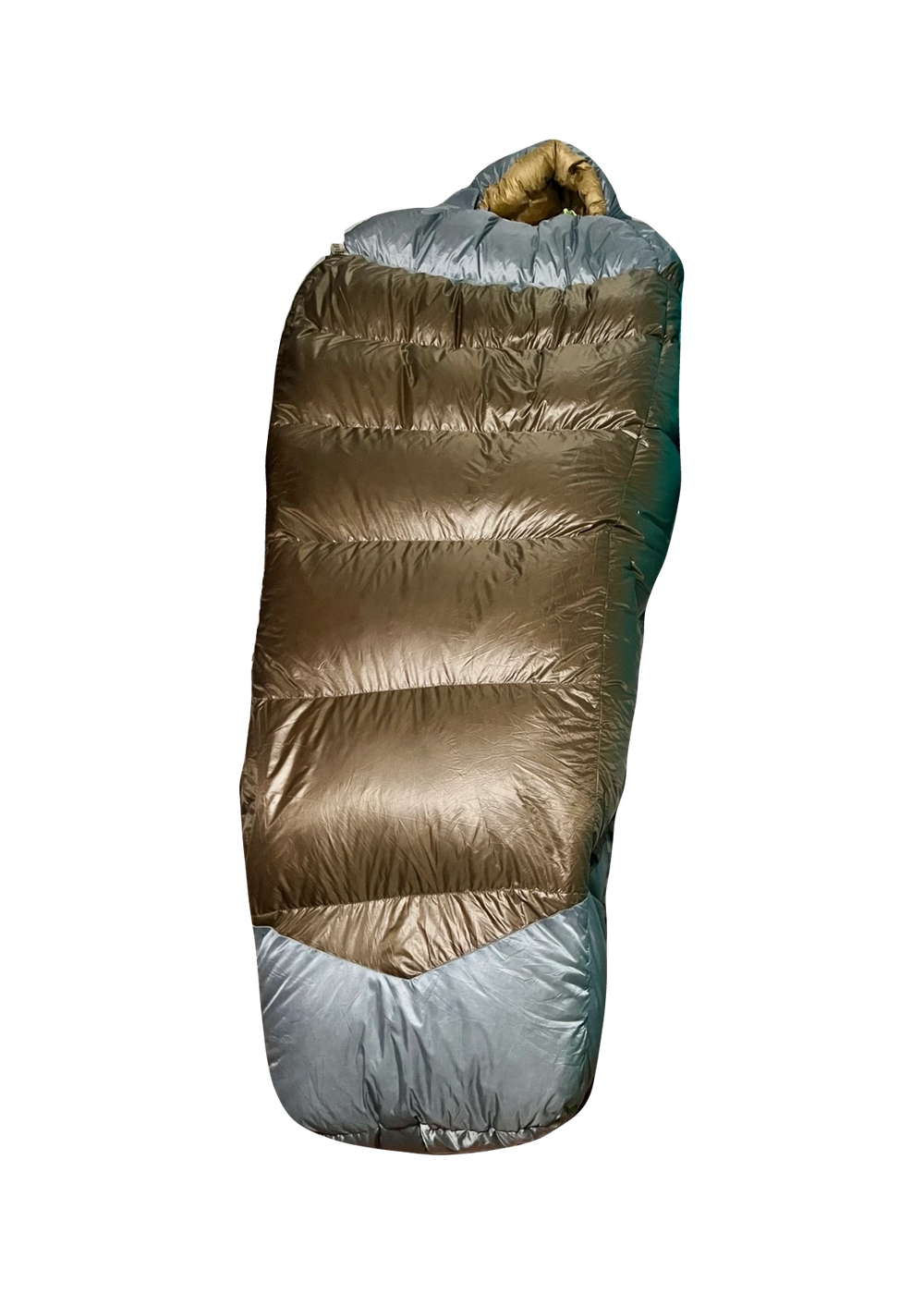
The Coleman North Rim is a budget-friendly cold-weather mummy bag with an adjustable hood and a full-length Thermolock draft tube. It keeps the basic cold-weather features without moving into premium down-bag pricing.
Quick Specs
Why It Fits
• Mummy shape and adjustable hood help retain heat around the head and shoulders
• Synthetic insulation keeps the price more accessible
What to Consider
•0°F is not a comfort guarantee
• Not designed for lightweight backpacking
Best For: Campers on a budget who want to move from a basic warm-weather bag to a better-equipped cold-weather mummy bag.
Why We Picked It
The North Rim earns its budget spot not simply because it is inexpensive, but because it still includes the cold-weather features that matter: a cinchable hood, zipper draft protection, and a mummy shape that reduces excess interior space.
It’s neither the lightweight choice nor the premium one. But for occasional trips in colder weather, when you don’t want to spend several hundred dollars on your first winter sleeping bag, those trade-offs are practical.
Best for Winter Backpacking
NEMO Sonic 0°F
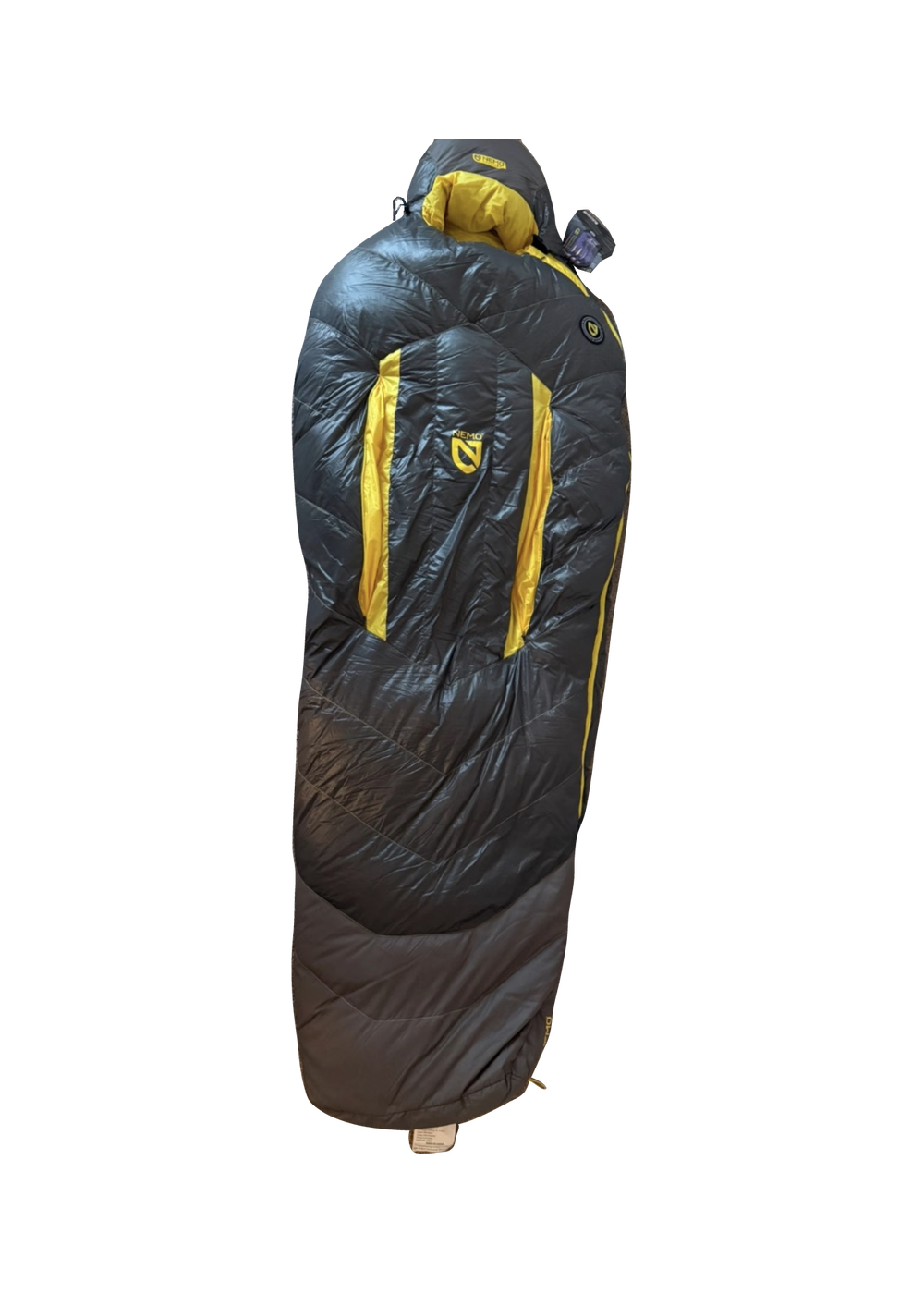
On a backpacking trip into the mountains, warmth is only the first requirement. The sleeping bag also has to fit in your pack and come along for every mile. The NEMO Sonic 0 uses 800-fill-power hydrophobic down, and the Regular weighs about 3 lb 4 oz. REI lists an ISO-tested comfort rating of 14°F and a tested lower limit of 0°F, which helps explain how to read the “0°F” in the name.
Quick Specs
Why It Fits
• At about 3 lb 4 oz, the Regular is a realistic weight to consider for a winter backpacking load.
• Thermo Gill lets you release some heat on milder nights without immediately opening the main zipper all the way.
• Hydrophobic down, a draft collar, and a waterproof/breathable footbox suit the moisture and condensation often encountered in a winter tent.
What to Consider
• It costs much more than a general-purpose camping bag. The extra expense makes more sense when you need a bag for winter backpacking with adjustable ventilation.
• It is not designed simply to post the lowest weight. Winter use and temperature regulation remain the priorities.
Best For: Winter backpackers who need to carry their sleeping bag into cold mountain conditions and want an easy way to vent heat on milder nights.
Why We Picked It
When looking for the best 0-degree sleeping bag, don’t choose based only on the most prominent “0°F” label. For winter backpacking, the Sonic 0 appeals to me because it addresses both cold-weather use and the need to carry the bag. Thermo Gill venting makes milder nights easier to manage, too.
Among these six bags, it comes closest to the role of a technical 0-degree down sleeping bag. It provides insulation for cold nights, with a way to shed heat as temperatures rise without opening the main zipper all the way.
Best Heavy-Duty Base Camp
ALPS OutdoorZ Redwood -25°F

One look at the Redwood -25°F makes it clear this isn’t a backpacking bag. It’s big and heavy, in exchange for more room and substantial materials at a fixed camp. ALPS itself positions it for frigid base camps, and the canvas shell with a cotton flannel lining fits that heavy-duty approach.
Quick Specs
Why It Fits
• The wide rectangular shape suits a fixed camp, with more room to turn over and stretch your legs at night.
• The canvas shell and flannel lining are thick and durable, with a very different feel from lightweight nylon.
• The two-layer offset construction and TechLoft Silver fill are designed for cold-weather base-camp use.
What to Consider
• At about 13 lb, it can essentially be ruled out for ordinary backpacking.
• -25°F is the manufacturer’s rating, not a temperature at which we can promise everyone will sleep comfortably.
Best For: Campers at fixed camps or hunting camps, or anywhere a vehicle can get close, who don’t mind trading weight and packed size for more room.
Why We Picked It
The -25°F label is an easy attention-grabber. But if you’re looking for a sub-zero sleeping bag or comparing extreme cold-weather sleeping bags, the more useful thing to notice is how consistent the Redwood’s design is: it’s built for a fixed camp where you won’t have to carry it far.
That’s also why an extreme-cold sleeping bag like this shouldn’t be judged by the same yardstick as a lightweight backpacking bag. The Redwood can weigh well over 10 lb because it usually doesn’t have to travel on your back. With a backpacking bag, you carry every pound yourself.
Best Lightweight Cold-Weather Crossover
Kelty Cosmic Down 20°F

The Cosmic Down 20 bridges three-season camping and colder nights. It’s much lighter than the bulky bags you bring in the car: the Regular weighs about 2 lb 7 oz and packs to roughly 8 × 13 in. Its 550-fill-power down, draft tube, and collar make it a practical option for cooler three-season trips.
Quick Specs
Why It Fits
• It is much lighter than a heavy car-camping bag, making it easier to manage on short backpacking trips or when trunk space is limited.
• The 550-fill-power down and trapezoidal baffles are paired with draft protection at the zipper and collar. Basic warmth features have not been cut simply to save weight.
• Dual-locking zipper sliders make it easier to vent a little heat in milder weather.
What to Consider
• Kelty classifies it as a three-season bag. The 20°F label does not make it a deep-winter workhorse.
• The 550-fill-power down balances practicality and price rather than following the premium, ultralight 800–900-fill-power approach.
Best For: Campers who don’t need a true 0°F winter bag but still want to keep weight and packed size manageable.
Why We Picked It
The Cosmic Down 20 is not positioned here as a true deep-winter bag. Instead, it fills the gap between bulky car-camping bags and dedicated winter backpacking models. It fits better as a lightweight cold-weather sleeping bag: much lighter than the car-camping options, with more cold-weather features than an ordinary warm-weather bag. At about 2 lb 7 oz for the Regular, it’s built for a very different kind of trip than the 7 lb and 13 lb options.
If you’re comparing 20-degree sleeping bags, the Cosmic Down 20 is a useful reference point. It’s light, doesn’t take up too much room when packed, and has basic draft protection. But Kelty still classifies it as a three-season bag. That distinction tells you more than the “20°F” alone.
Best Premium Roomy 0°F Bag
Western Mountaineering Kodiak MF 0°F

The Kodiak MF is the most expensive of these six bags, and the one most likely to make you ask what the extra money buys. The 6’0″ version uses 850+ fill-power goose down and weighs about 2 lb 12 oz, yet still has a 66 in shoulder girth. It hasn’t saved weight by making the mummy shape especially narrow, which matters if you dislike feeling confined.
Quick Specs
Why It Fits
• 850+ fill-power goose down allows the 6’0″ version to remain a 0°F-rated bag while weighing less than 3 lb.
• The 66 in shoulder girth is a major selling point for larger campers or anyone who dislikes narrow mummy bags.
• The draft collar, zipper draft tube, and continuous baffles are designed around cold-weather use.
What to Consider
• Price is the biggest barrier. If you camp only once or twice a year, the expense can be difficult to justify.
• 0°F remains the brand’s rating, not a promise that every user will be comfortable at that temperature.
Best For: Campers with a generous budget who want a 0°F down bag without the close fit of a traditional narrow mummy bag.
Why We Picked It
With a 0-degree goose down sleeping bag like the Kodiak MF, you’re paying for more than the 850+ fill-power number. What sets it apart is the combination of wider shoulder room and full draft protection in a bag that weighs less than 3 lb.
If you want a roomier 0-degree sleeping bag without the bulk and weight of a large rectangular synthetic bag, the Kodiak MF offers another option. It’s expensive, but the specs and design at least make it clear what that money is buying.
Which Cold-Weather Sleeping Bag Fits Your Trip?
Two bags can both say “0°F” or “winter” and work very differently on different trips. When choosing the best winter sleeping bag, I start with a practical question: will you have to carry it a long way?
With the car parked near camp, the TETON Celsius XXL’s extra room becomes more appealing. If your budget is tighter and you prefer a mummy shape, the Coleman North Rim is a better fit. For this kind of trip, I wouldn’t give up much sleeping space just to save two or three pounds.
Once you’re carrying your gear into the mountains, the NEMO Sonic 0 makes more sense. When I’m looking for the best sleeping bag for winter camping with a backpacking trip in mind, I want enough warmth without an exhausting load. I also want a way to vent heat when the night isn’t as cold as expected.
If the nights aren’t cold enough to call for a true 0°F bag, the Kelty Cosmic Down 20 is easier to carry. It’s a good fit for cool three-season trips and some mild winter nights, but there’s no reason to present it as deep-winter gear.
If you mostly carry your gear on your back and don’t need a dedicated winter bag, my guide to the best backpacking sleeping bags compares lighter options for different budgets.
The ALPS Redwood -25°F goes in the opposite direction. At 13 lb, it’s hardly worth considering for a backpacking load. But at a fixed camp with vehicle access nearby, that weight is less of a problem, and roominess and durability matter more.
If budget isn’t the first obstacle and you really dislike narrow mummy bags, the Western Mountaineering Kodiak MF is worth a closer look. It isn’t the mainstream choice. It’s more for someone who already knows why they want a premium winter sleeping bag.
As for the best sleeping bag for snow camping, snow alone doesn’t give you the answer. Some snowy nights stay in the teens Fahrenheit; others drop below 0°F. What matters is how cold that particular night will be and whether your sleeping pad provides enough insulation.
How We Chose These Cold-Weather Sleeping Bags
First, I confirm the exact model. Details such as 0°F versus 20°F, Regular versus Long, and left- or right-side zippers matter. If the product doesn’t match, the weights and dimensions that follow may no longer be relevant. The Western Mountaineering Kodiak MF is listed here in its 6’0″ version, and the Kelty Cosmic Down 20 figures are specifically for the Regular.
Once the model is confirmed, I look at warmth and how easy the bag is to carry. Temperature ratings matter for winter sleeping bags, but a lower number doesn’t make a bag better for everyone. A roomy 7 lb bag is manageable at a drive-in campsite. For winter backpacking, weight and packed size become much more important.
Then I look at the details that affect a cold night in camp: whether the hood cinches down and whether there’s a draft tube along the zipper. I also check the footbox design and ventilation for milder weather. With down bags, fill power and moisture protection matter, too. Spec sheets can be long, but these are the details that have the most bearing on use.
Three Things to Check Before Buying a Winter Sleeping Bag
By now, your shortlist should be fairly small. Before ordering, I’d still check three things. A few extra minutes are worth it, because this is where many of the common misunderstandings about winter sleeping bags show up.
That’s especially true of models labeled 0°F. Two product names can look similar yet deliver very different experiences in a tent.
A Temperature Rating Is Not a Guaranteed Comfort Temperature
It’s natural to look at the 0°F, 10°F, or 20°F first. A lower number may feel reassuring, but it doesn’t tell you that you’ll definitely sleep comfortably at that temperature.
The temperature in a bag’s name may be the brand’s own rating or may be closer to a lower-limit rating. Some products list a comfort rating separately. Whether you sleep cold and how well your pad insulates you will affect how warm you feel. REI’s explanation of temperature ratings also advises treating them as a comparison and shopping guide, not a promise that everyone will feel the same.
When looking at warm sleeping bags, I first work out what that number means, then decide whether it’s enough for the trip. If you’re heading somewhere near 0°F or colder, leaving some margin is better than discovering at night that you’ve cut it too close.
Choose Down or Synthetic Based on Your Camping Style
If the bag will be on your back for miles, I usually look at down first.
The reason is straightforward. For comparable warmth, down generally offers lower weight and a smaller packed size. A few miles into a hike, that difference feels real. The NEMO Sonic 0, Kelty Cosmic Down 20, and Western Mountaineering Kodiak MF serve different purposes, but all make more sense for someone who needs to factor pack weight into the purchase.
Being able to drive straight to camp changes the decision.
There’s no need to pay a premium just to save a few pounds. With the TETON Celsius XXL, Coleman North Rim, or even the heavier ALPS Redwood, you can put more emphasis on sleeping space and durability. They’re tiring to carry, but that drawback matters much less when they’re in the trunk.
Neither down nor synthetic is automatically better. For hiking, pay close attention to weight and packed size. At a drive-in campsite, comfort can take priority.
Don’t Forget Your Sleeping Pad
A winter sleeping bag matters, but so does the sleeping pad underneath you. No matter how much insulation is above you, you can still feel cold at night if there isn’t enough insulation below. That’s why upgrading your sleeping bag while continuing to use a thin summer pad can still leave you cold. When you lie down, your body compresses the insulation beneath you, so the sleeping pad and sleeping bag liner play an important role in the overall sleep system, and the right liner can also add a little extra warmth.
This is especially important if you’re shopping for extreme cold-weather sleeping bags. Even a very low temperature rating can’t make up for a pad that doesn’t insulate well enough.
Cold-Weather Sleeping Bag FAQ
What Is the Best Winter Sleeping Bag?
If you’re asking, “What is the best winter sleeping bag?” I wouldn’t simply name one model. That may seem convenient, but it can easily point someone toward the wrong bag.
With the car nearby, With the car nearby, a roomy option like the TETON Celsius XXL makes more sense. When the gear has to go on your back into a winter campsite, a bag better suited to carrying, such as the NEMO Sonic 0, moves up the list.
With a bigger budget and a strong dislike of narrow mummy bags, the Western Mountaineering Kodiak MF offers a different option again.
So “best” isn’t one fixed model. The useful question is which bag fits this particular trip.
What Is the Best Sleeping Bag for Winter Camping?
To answer “What is the best sleeping bag for winter camping?” First check how cold the night will be, then whether you need to carry the bag yourself.
If the car is parked beside camp, a little extra weight and width usually aren’t a problem. Once you’re carrying it for miles, that weight quickly goes from a number on a spec sheet to something you feel on your shoulders.
When choosing a winter camping sleeping bag, I’d rather first establish where it will be used overnight and how it will get there. That’s often more useful than starting with “Which one is warmest?”
Is a 0°F Sleeping Bag Always the Most Reliable Choice for Winter Camping?
When looking for the best 0-degree sleeping bag, don’t stop at the rating. 0°F is common on winter bags, but that number alone isn’t enough to choose one.
On some bags, 0°F is closer to a lower-limit rating; on others, it’s the brand’s own model rating. Whether you sleep cold and how well your pad insulates you will also affect how warm you feel.
Look beyond the “0” to the comfort and limit information to the comfort and limit information, then check whether the bag was designed for backpacking or general camping.
Is the Bag with the Lowest Temperature Rating Always the Warmest?
Not necessarily. When searching for the warmest sleeping bag, it’s easy to fall into the trap of comparing only the lowest numbers on the labels.
The ALPS Redwood -25°F, for example, has a very low manufacturer rating, but it’s a heavy-duty base-camp bag. For a winter backpacking trip, comparing it with a two- or three-pound down backpacking bag on temperature alone doesn’t tell you much.
How warm you feel also depends on fit and draft protection, as well as your pad and your own tolerance for cold. Temperature ratings can help narrow the options, but they shouldn’t be used alone to declare one bag the warmest.
Rather than focusing only on the bag with the lowest temperature rating, first work out where you’ll use it and whether you’ll have to carry it there.
Can You Use a Winter Sleeping Bag in Summer?
Can you use a winter sleeping bag in summer? Yes, but it can often be uncomfortably warm.
Two-way zippers, foot vents, or Thermo Gill venting like that on the NEMO Sonic 0 make warmer weather easier to manage. At least you have a way to let heat escape.
But if most of your camping happens in summer and early fall, I wouldn’t keep bringing a warmer winter bag just for the sake of an occasional winter trip. A suitable three-season bag is usually more comfortable and less hassle.
Is a 20°F Sleeping Bag Warm Enough for Winter?
If you’re considering a 20-degree sleeping bag, the answer depends on how cold the winter night will be. In some conditions, it’s enough. In others, it clearly isn’t.
A bag like the Kelty Cosmic Down 20 is better suited to cool three-season trips and some relatively mild winter nights. If the forecast is edging toward 0°F, I wouldn’t take it just because the name says 20°F.
One of the hardest problems to fix on a cold night is arriving at camp and realizing you’ve left too little margin for the temperature.
Conclusion
When buying a cold-weather sleeping bag, the lowest number on the label shouldn’t make the final decision.
With the car nearby, extra sleeping room can matter more than saving a few pounds. But if the gear has to go back on your shoulders the next day, weight and packed size stay with you for every mile. A bag weighing well over 10 lb, like the ALPS Redwood, makes sense at a fixed camp. On a backpacking route, it’s a different story.
That’s why this guide stays with six bags instead of filling the page with a dozen or more products.
These aren’t just versions of the same bag with different temperature ratings. Each has a purpose and clear trade-offs.
Decide what this trip will involve, then return to the Quick Picks and find the matching use. At that point, you’ll usually be down to one or two options.