How to Clean a Stainless Steel Sink and Restore the Shine

We may earn a commission from affiliate links to products on this page, at no additional cost to you. Learn more.
Stainless steel sinks can be a little frustrating. They spend all day around water and dish soap, yet somehow they still manage to look dirty.
The sink may look perfectly fine right after you finish the dishes, but once the water dries, the white spots come back. The area around the drain can start to look cloudy, buildup collects around the edges, and the whole sink loses some of its shine.
If yours looks the same, the good news is that learning how to clean a stainless steel sink doesn’t have to be complicated.
My rule is simple: start with the gentlest method for everyday grime. If hard-water buildup, grease, or stubborn residue is still there, then step things up for that specific problem.
What Do You Need?
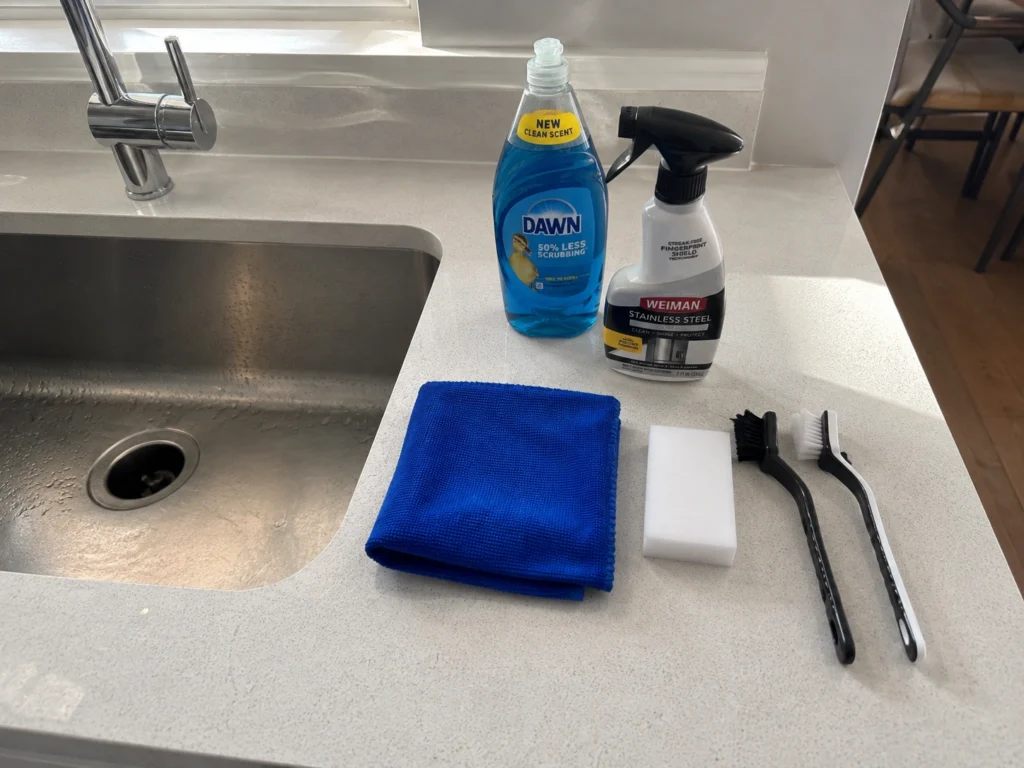
For everyday cleaning, you really only need a few things: dish soap, a Melamine Foam Cleaning Sponge, a crevice brush, and one or two microfiber cloths.
If your sink has noticeable mineral buildup or stains that regular dish soap can’t remove, then bring in a cleaner that’s specifically suitable for stainless steel sinks.
PRODUCTS MENTIONED
Before You Start, Take a Look at Your Sink
Not all stainless steel sink surfaces are exactly the same. Some have a noticeable brushed grain, some are smoother, and some brands use their own surface finishes.
If you’re only using warm water and dish soap, things are usually pretty simple. But if you plan to use a dedicated cleaner, polish, or anything stronger, it’s a good idea to check the manufacturer’s care instructions first.
There’s one thing that’s easy to mix up:
Sinks and refrigerator doors may both be stainless steel, but they deal with different problems.
If you’re cleaning a refrigerator, dishwasher, or another stainless steel appliance surface, our other article, How to Clean Stainless Steel Appliances Without Streaks, will be a better fit.
How to Clean a Stainless Steel Sink Step by Step
For everyday cleaning, this is how to clean a stainless steel sink before reaching for a stronger product: start with these five simple steps.
Step 1: Empty the Sink
Empty the sink, then rinse away food scraps, coffee grounds, and other small particles.
Don’t underestimate this step.
If hard particles get trapped under the sponge and are rubbed back and forth, they can leave scratches on the sink.
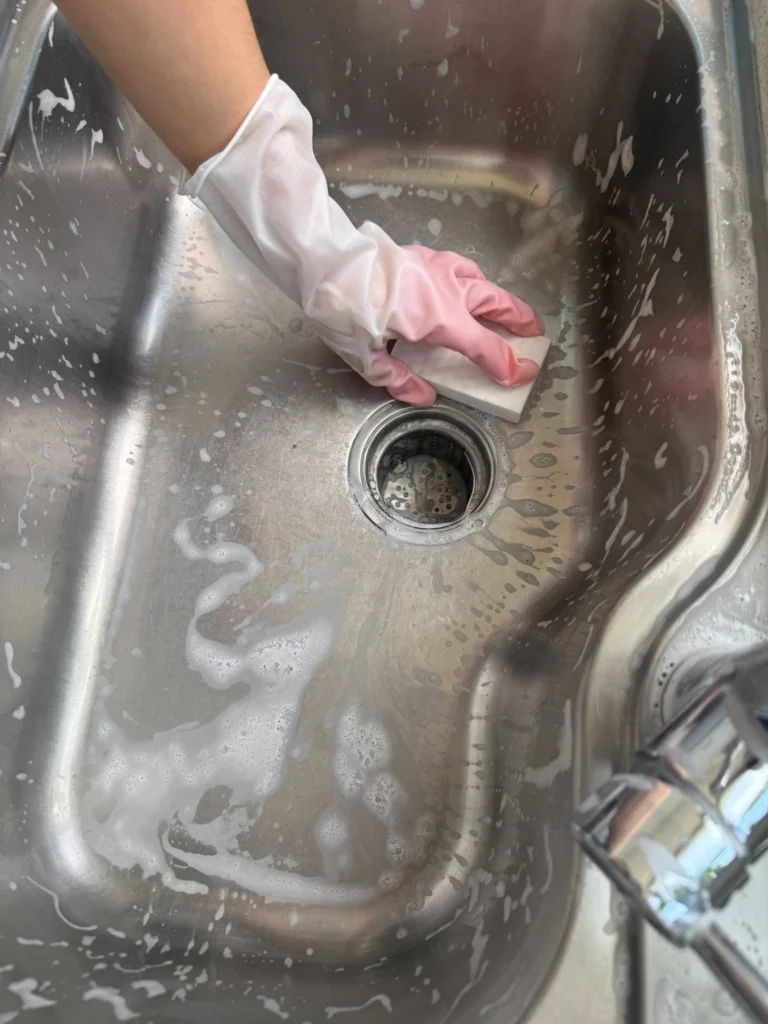
Step 2: Start With Warm Water and Dish Soap
Wet the sink, add a little dish soap to a Melamine Foam Cleaning Sponge or microfiber cloth, and wipe down the entire sink.
Give a little extra attention to the area around the drain, the four corners, and the bottom of the sink. These are usually the places where food and grease collect most easily.
If you’re only dealing with everyday grime from cooking and washing dishes, this usually takes care of most of it.
That’s also why I don’t recommend starting with a dedicated cleaner.
If dish soap can handle it, let dish soap handle it.
Step 3: Wipe With the Grain
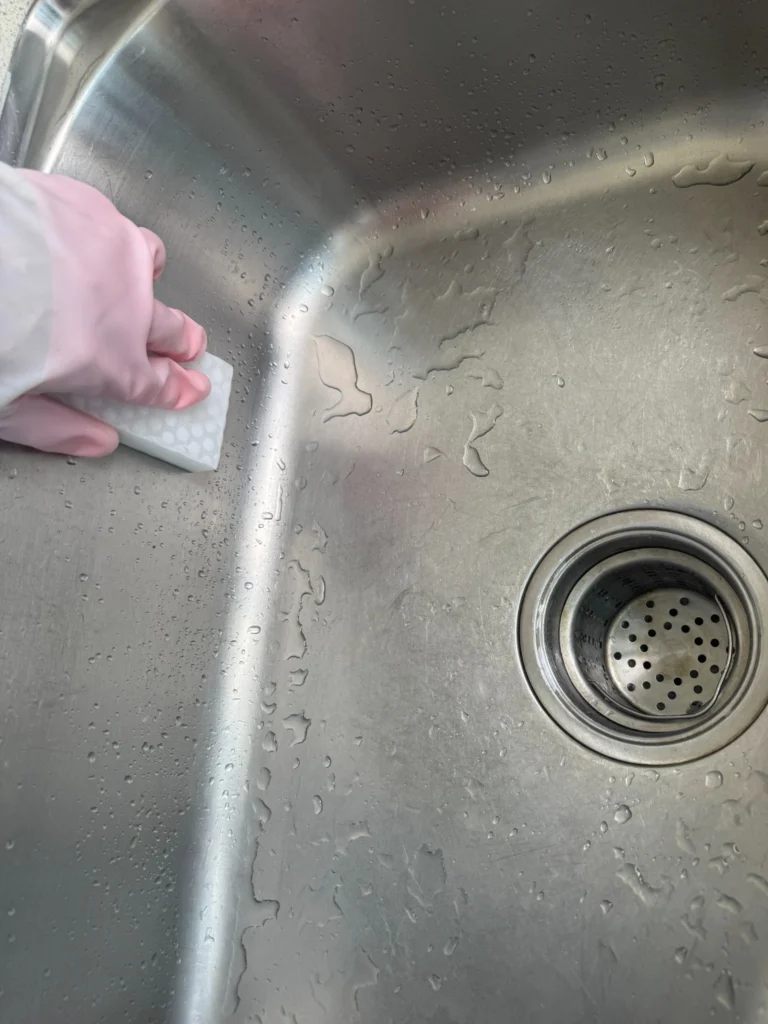
If you can see the brushed grain on the stainless steel, try to wipe in the same direction.
You don’t need to be overly careful, but there’s also no reason to scrub hard in circles with a sponge.
What you really want to avoid is this:
Scrubbing out a small stain only to leave a more noticeable scratch on the sink.
Step 4: Rinse Thoroughly
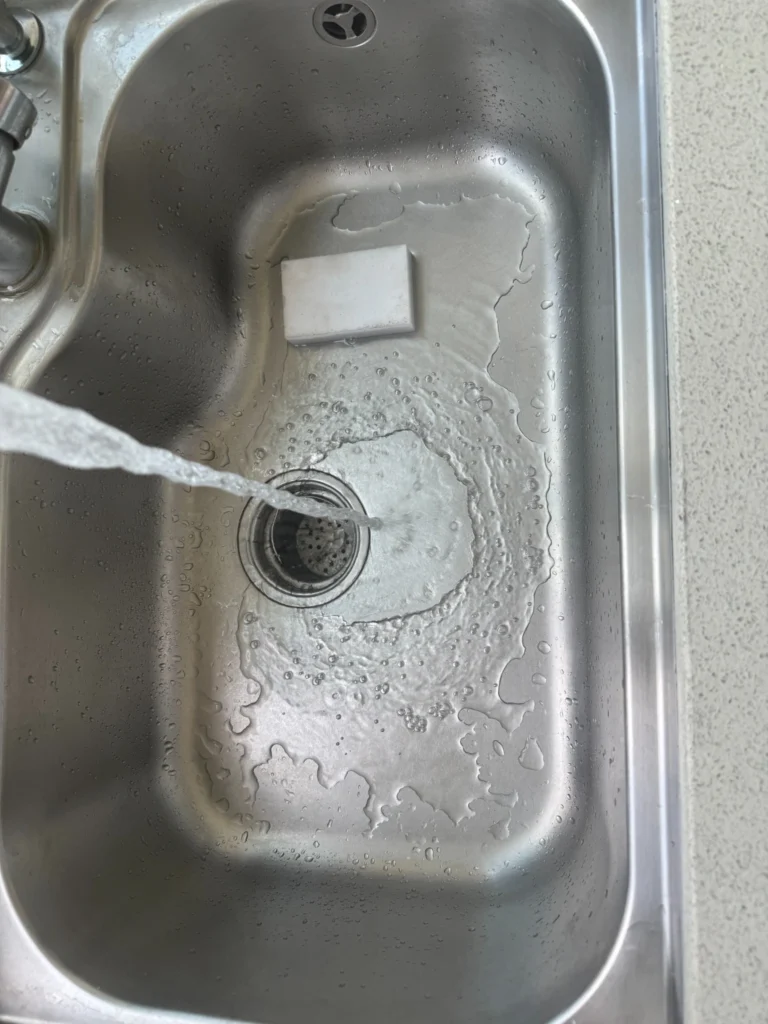
Once you’re done cleaning, rinse away all the dish soap and loosened debris.
This step is more important than many people realize.
Sometimes a freshly cleaned sink still looks cloudy, not because it’s dirty, but because a thin layer of cleaner has been left behind.
So an extra ten seconds of rinsing may be more useful than adding another product.
Step 5: Dry the Sink
If you take only one small habit from this article, I’d choose this:
Dry the sink after washing it.
Water evaporates, but the minerals in it can stay behind, especially if you have hard water.
A lot of the time, restoring the shine doesn’t even require polish yet. It’s simply that this last step was missed.
How to Remove Water Spots and Hard-Water Buildup
If you’re only dealing with a few fresh water spots, start with the steps above: clean, rinse, and dry the sink.
Wait until the sink is completely dry, then take another look.
If the white, cloudy marks are still there—especially if there’s a noticeable ring around the drain—it’s more likely to be hard-water buildup rather than ordinary dirt.
That’s when it makes sense to step things up.
Different manufacturers may give different advice for this step. For example, Kraus recommends using white vinegar to treat hard-water mineral buildup on its stainless steel sinks, followed by rinsing and drying.
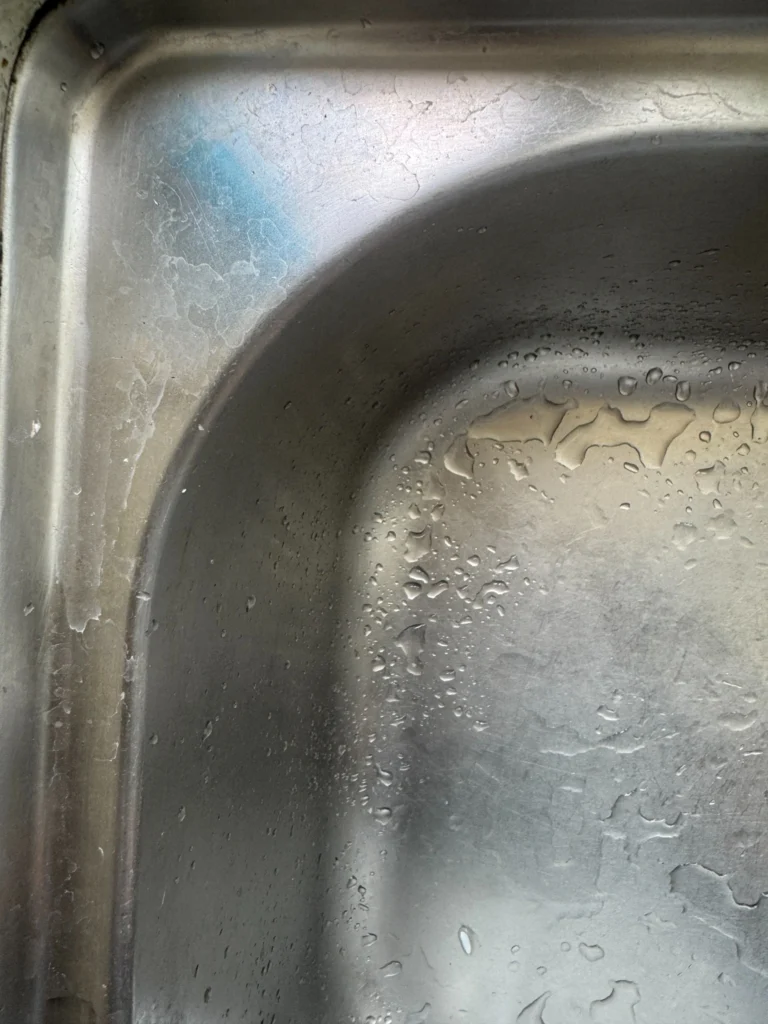
If the basic method still isn’t enough, this is where a stainless steel cleaner can really be useful.
How to Remove Grease and Stubborn Residue
Kitchen sinks have another very common problem: grease.
Start with dish soap again.
Warm water, dish soap, and a Melamine Foam Cleaning Sponge. Rinse the sink when you’re done and take a look.
If it’s clean, stop there.
There’s really no need to use every cleaner in the cabinet just because you have five bottles sitting there.
If the basic method still can’t handle it, switch to a stainless steel cleaner that’s suitable for the sink.
When Do You Really Need a Stainless Steel Cleaner?
There really isn’t a complicated rule for deciding.
Everyday grease?
Start with dish soap.
Fresh water spots?
Dry the sink first and see how it looks.
Is the everyday grime already gone?
Then stop there.
But if you’re dealing with mineral buildup or stubborn residue that dish soap can’t remove, or the sink still looks noticeably dull after it has been thoroughly cleaned and dried, that’s when a stainless steel cleaner is worth using.
How to Make a Stainless Steel Sink Shine Again
Don’t reach for a stainless steel cleaner or polish just yet.
First, check three things:
Has the sink been thoroughly rinsed?
Is it completely dry?
Have you given it a final wipe with a clean microfiber cloth?
If the sink already looks clean and even after that, you can stop there.
If it still looks noticeably dull, consider a stainless steel cleaner and polish that’s suitable for sinks.
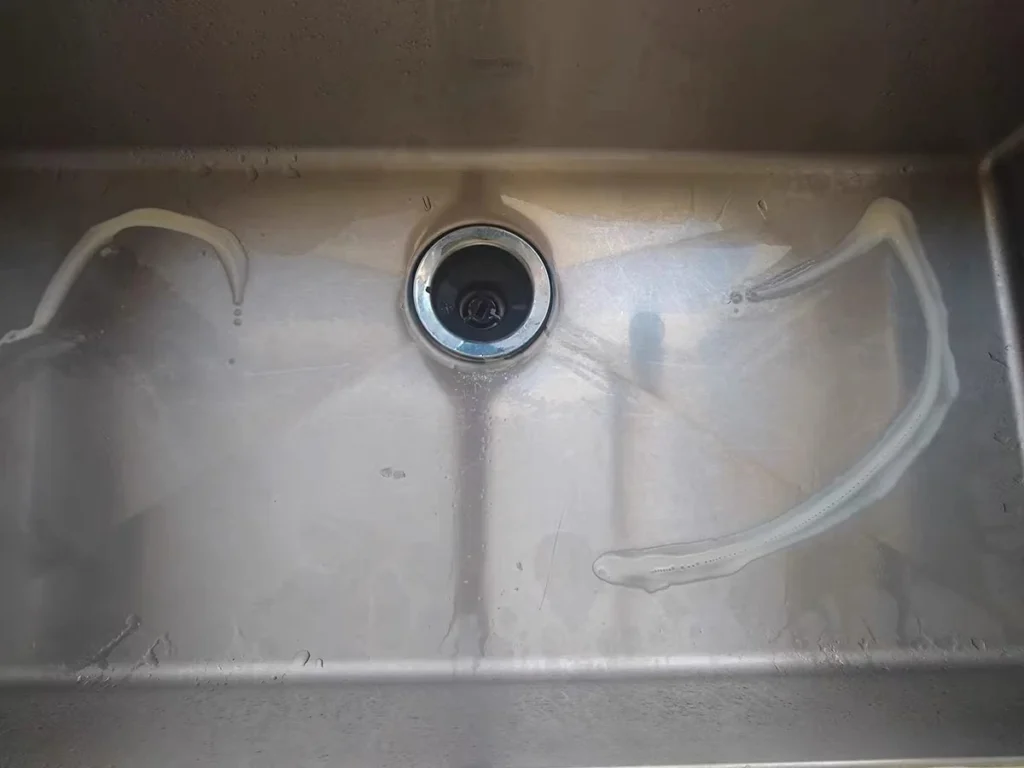
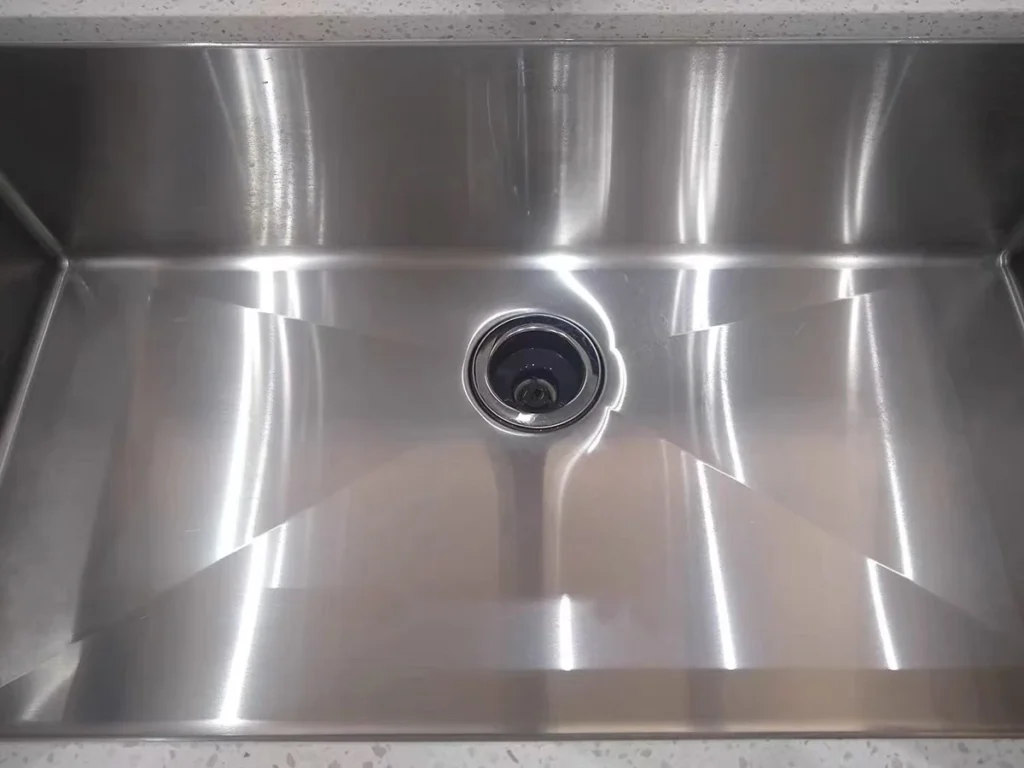
What Should You Avoid Using on a Stainless Steel Sink?
Stainless steel is durable, but that doesn’t mean you can scrub it with just anything.
For everyday cleaning, I avoid steel wool, wire brushes, rough scouring pads, and chlorine bleach, and I always check the manufacturer’s care instructions before using a stronger cleaner.
If a stain won’t come off:
Change the method first. Don’t make your first reaction to scrub harder.
That’s usually safer.
How to Keep a Stainless Steel Sink Clean Longer
I don’t think a kitchen that’s actually used for cooking every day needs to have a sink that looks like a glossy ad twenty-four hours a day.
That’s not realistic.
What really helps are a few very simple habits.
After cooking, rinse away obvious food residue. Don’t let greasy messes sit there for too long. Dry the sink after a proper cleaning, and deal with white mineral buildup when you first start to notice it.
You don’t need to deep-clean it every day.
Spending one minute on it regularly is usually much easier than spending half an hour on it a few weeks later.
This is also how I want the Cleaning content at The Clever Everyday to feel:
It’s not about teaching people to chase an “always perfect” home.
It’s about making the little things we have to do every day a little easier.
Frequently Asked Questions
Can You Use White Vinegar to Clean a Stainless Steel Sink?
Some stainless steel sink manufacturers allow white vinegar to be used for hard-water mineral buildup. Kraus, for example, includes this in its care guidance.
But finishes can vary from one sink to another, so don’t automatically apply one brand’s care instructions to every stainless steel sink.
The safest approach is still to check the manufacturer’s care instructions for your own sink first.
Can You Use Baking Soda?
Many cleaning guides.But baking soda is mildly abrasive, so we wouldn’t describe it as something you can freely scrub on every sink.
If the manufacturer allows it, use it gently. If you’re not sure, start with a mild, non-abrasive method.
How Often Should You Clean a Stainless Steel Sink?
You don’t need to give yourself a complicated cleaning schedule.
Rinse away obvious food and grease when you see it, do a basic cleaning when water spots or a greasy film start to appear, and deal with mineral buildup early when it first begins to form.
The goal isn’t to deep-clean the sink every day.
Don’t let a problem that takes five minutes to solve slowly turn into a thirty-minute job.