How to Clean Stainless Steel Appliances Without Streaks
We may earn a commission from affiliate links to products on this page, at no additional cost to you. Learn more
Stainless steel appliances make a kitchen look clean, polished, and modern. But in everyday use, their surfaces can easily show fingerprints, grease, and streaks. Refrigerators, dishwashers, ovens, air fryers, and other kitchen appliances are especially prone to this.
For ordinary everyday cleaning, if you want to clean stainless steel appliances without streaks, the good news is that you usually don’t need harsh cleaners or complicated tools. A clean microfiber cloth, warm water, and a small amount of mild dish soap can already handle many common cleaning problems.
What really matters is the way you clean:
Start with a gentle method, wipe with the grain, remove any cleaner residue, and dry the surface immediately at the end.
If your appliance has a fingerprint-resistant coating, a specialty finish, black stainless steel, or another type of surface treatment, it’s best to check the care instructions for that specific model before using vinegar, polish, or a specialty cleaner.
If you’re cleaning a stainless steel sink rather than an appliance, the cleaning approach is a little different. See our guide on how to clean a stainless steel sink and restore the shine.
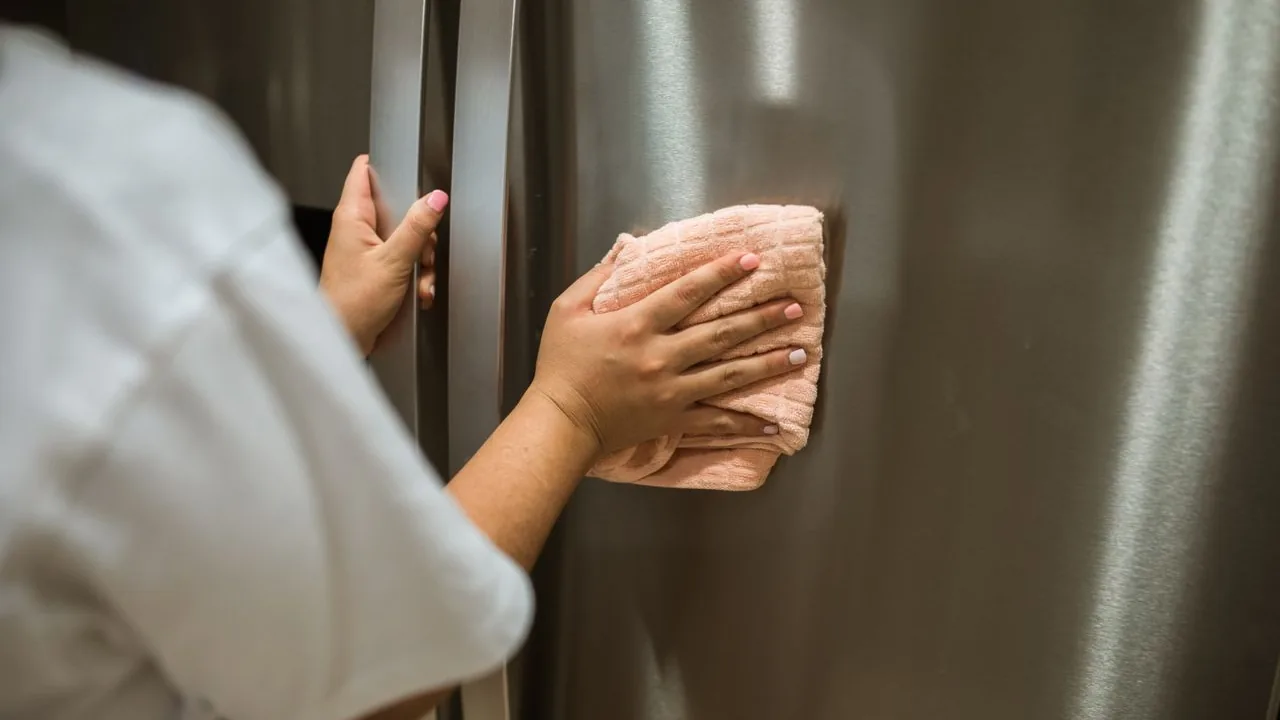
For everyday fingerprints, light grease, and ordinary streaks, start with warm water and a small amount of mild dish soap. Lightly dampen a clean microfiber cloth and wipe in the direction of the stainless steel grain. Then use another cloth dampened only with clean water to remove any residue, and immediately dry the surface with a clean, dry microfiber cloth, again working with the grain. Don’t use too much cleaner, and don’t allow the surface to air-dry. If the appliance has a fingerprint-resistant coating or specialty finish, check the care instructions for that specific model first.
Why Does Stainless Steel Look Streakier After Cleaning?
The first common problem is wiping direction.
Traditional stainless steel surfaces often have very subtle horizontal or vertical grain lines. Wiping in the direction of the grain usually gives a more even finish than rubbing back and forth across it.
The second problem is the cleaning tool.
Steel wool, rough scouring pads, and highly abrasive cleaning tools can scratch the surface, making it easier for mineral buildup and grease to form later.
The third problem is cleaner residue.
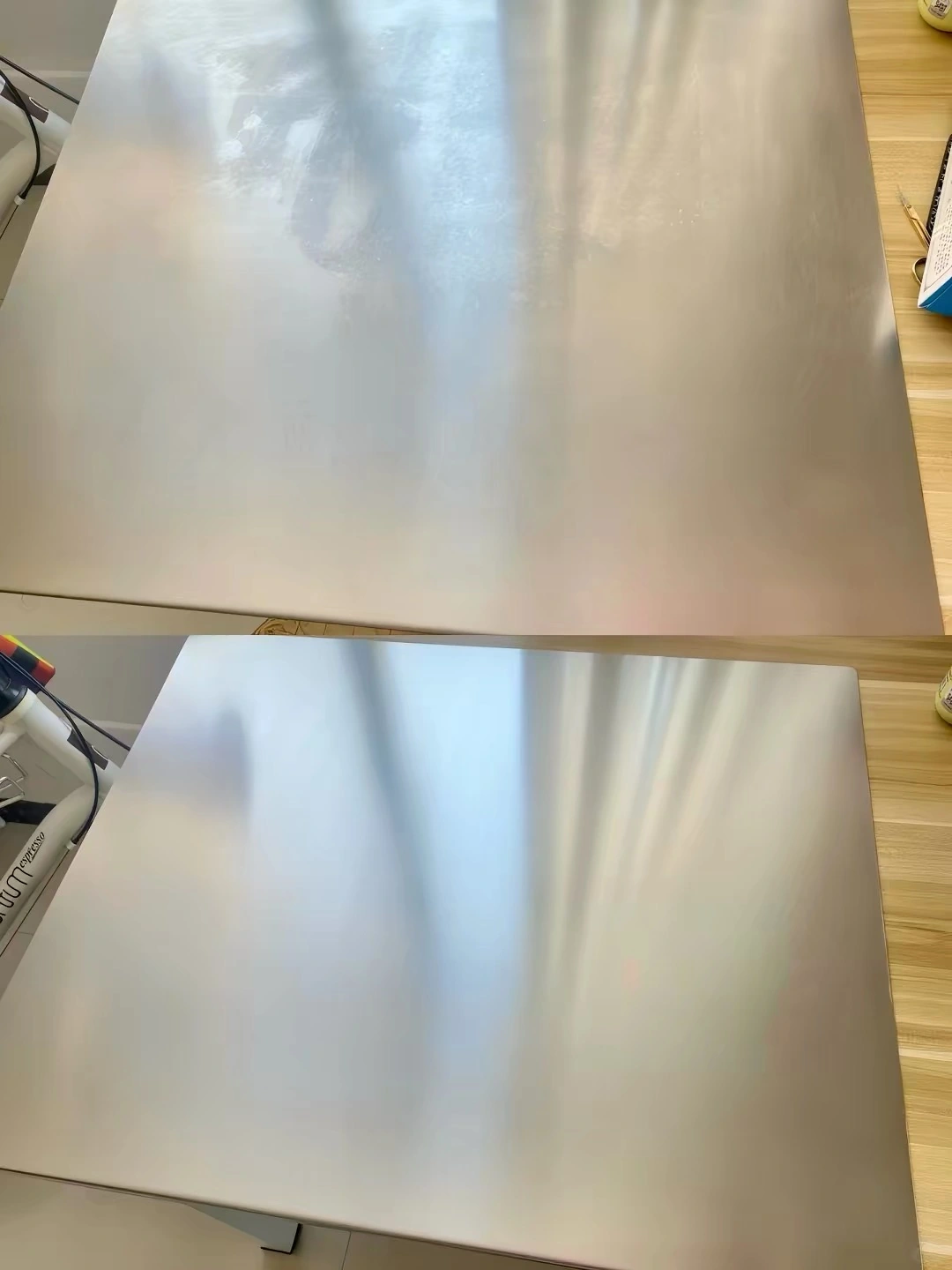
Using too much dish soap, spray cleaner, or polishing product without fully removing it can leave behind haze or visible streaks once the surface dries.
Another very common cause is air-drying.
When tap water evaporates, some of the minerals in the water can remain on the surface and form noticeable water spots.
If you want to clean stainless steel appliances without streaks, the key isn’t scrubbing harder. It’s leaving behind less cleaner and less water.
What Do You Need?
You don’t need complicated tools for everyday cleaning.
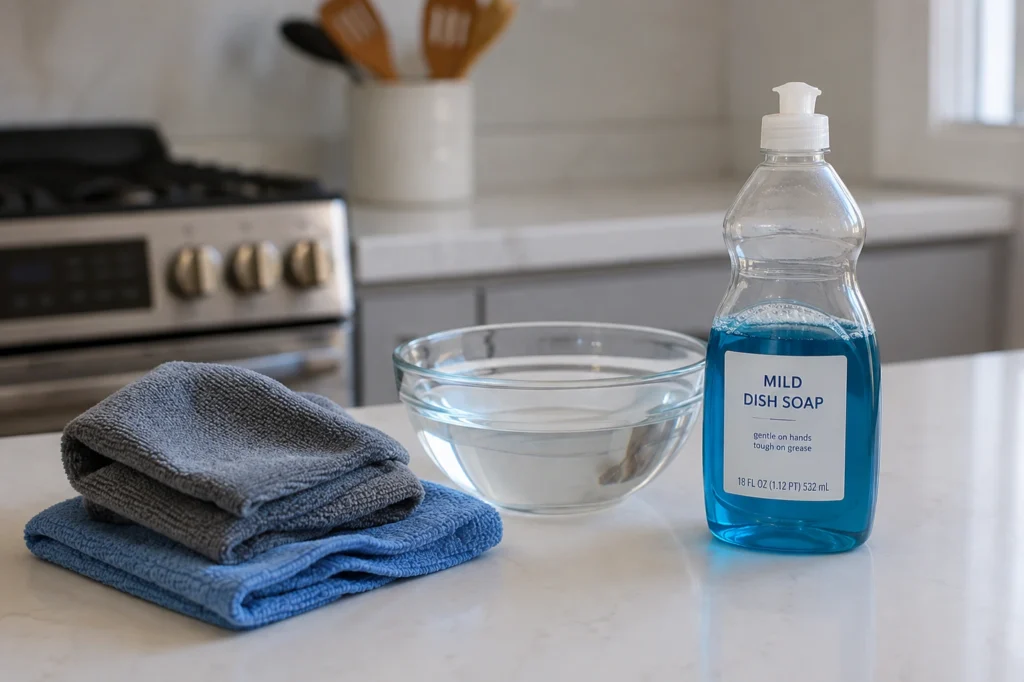
For my everyday cleaning routine, I usually prepare:
- Two soft, clean microfiber cloths
- Warm water
- A small amount of mild dish soap
Optional, Depending on What You Need
- A small amount of white vinegar — only for surfaces confirmed to be suitable
- Olive oil or a stainless steel cleaner
- A small amount of baking soda
Important Note:
White vinegar is also commonly used on stainless steel, but I don’t recommend treating it as a default method for every appliance.
For fingerprint-resistant, coated, or other specialty finishes in particular, it’s safer to check the manufacturer’s care instructions first.
For everyday cleaning, I like to keep two clean microfiber cloths on hand—one for wiping the surface and another for drying it right away. If the cloths you’re currently using feel rough, leave lint behind, or are already holding onto grease, switching to a fresh set of soft microfiber cloths can make cleaning easier and help prevent residue from being transferred straight back onto the stainless steel. If you’re not sure what to choose, this is the set of soft microfiber cleaning cloths I use for everyday cleaning.
Before You Start: Check the Finish and Find the Grain
Not every surface that looks like stainless steel should be cleaned in exactly the same way.
First, check whether your appliance has a fingerprint-resistant coating or another specialty finish. If you’re not sure, check the appliance’s cleaning instructions first to avoid accidentally damaging the surface.
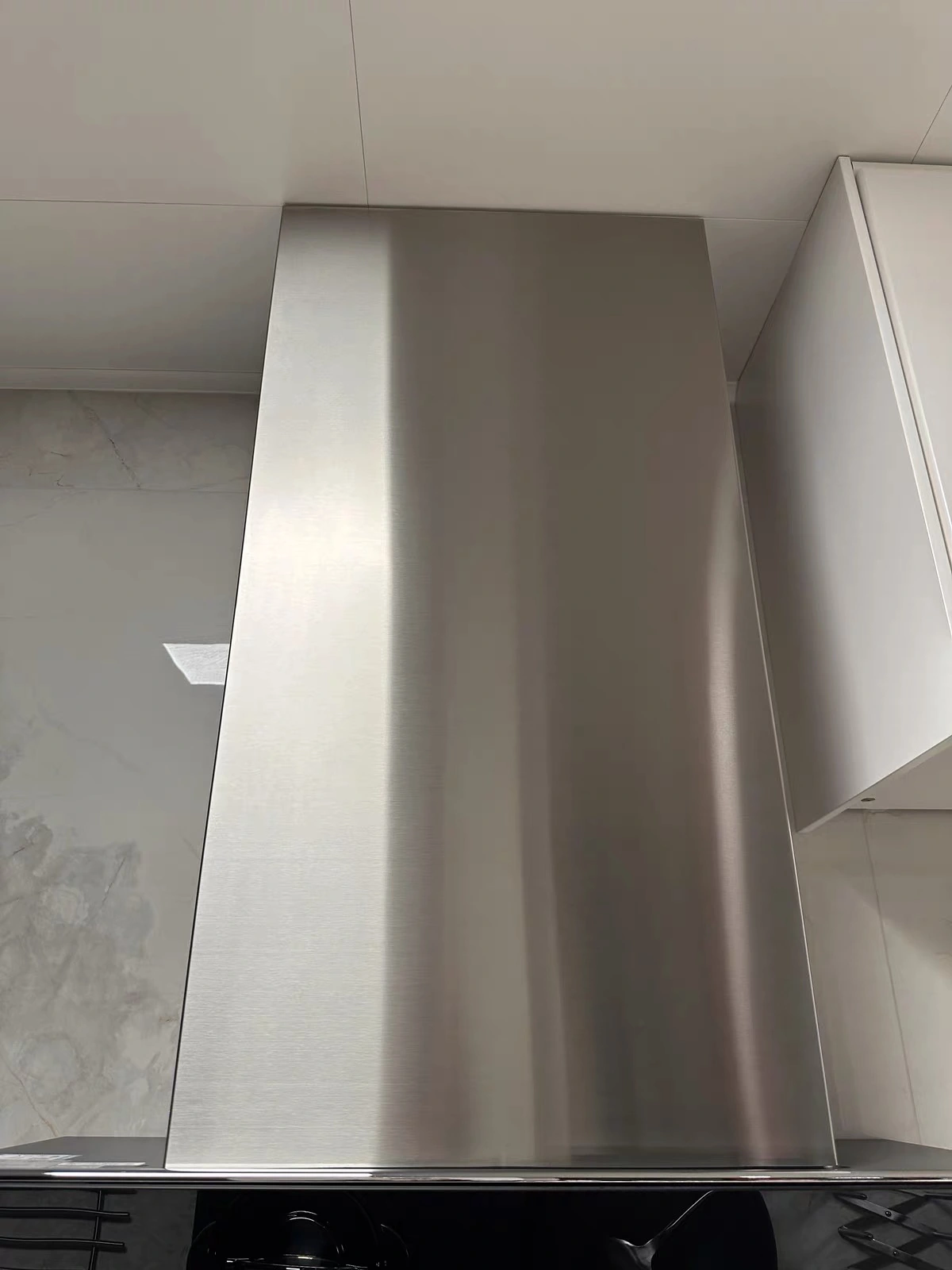
Next, take a close look at the surface itself.Under the light, many traditional stainless steel surfaces have faint horizontal or vertical grain lines. When you clean the appliance, try to wipe in the same direction as those lines.
You don’t need to press very hard. Gentle, steady strokes in one direction are usually a better approach than quickly scrubbing back and forth.
How to Clean Stainless Steel Appliances Without Streaks: 5 Simple Steps
Step 1: Remove Dust and Loose Debris
Start with a completely dry microfiber cloth and gently wipe away surface dust, food crumbs, and other loose particles.Pay special attention to handles, edges, areas around control panels, and the top of the appliance.Removing loose debris first can help reduce the chance of dragging particles across the surface during wet cleaning.
Step 2: Use Warm Water and a Small Amount of Mild Dish Soap
Add only a small amount of mild dish soap to warm water.
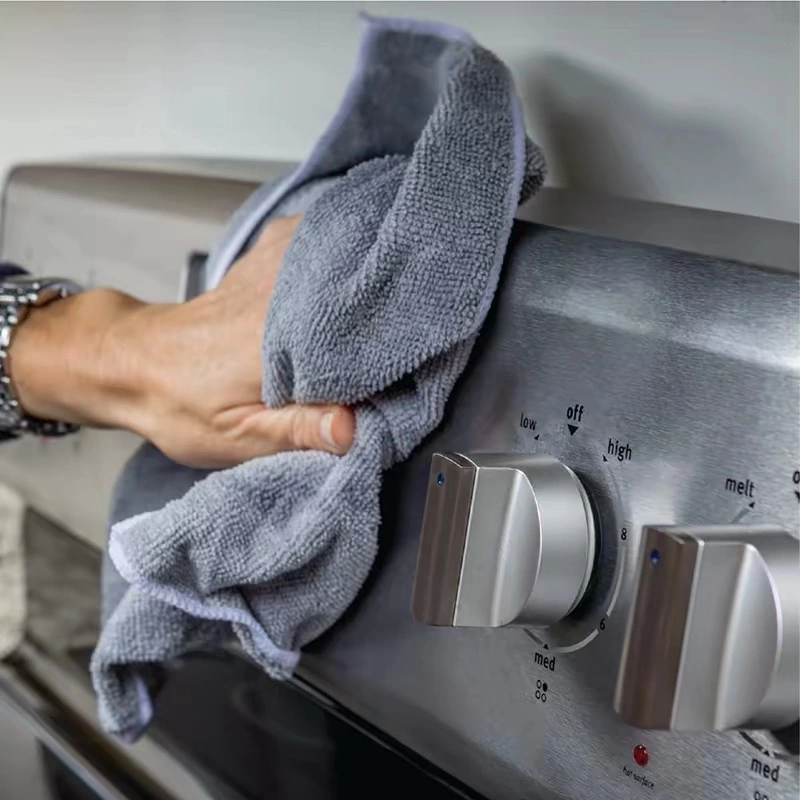
Use a soft microfiber cloth dampened with the warm soapy water to wipe the surface. This can remove loose dirt and grease. If the grease is heavier, go over the area a few times rather than using too much water, which can leave water marks.
Work in sections and wipe gently in the direction of the grain.
You really don’t need much dish soap. Using too much can leave behind a film, which is one reason stainless steel sometimes looks streakier after cleaning than it did before.
Step 3: Give Heavier Grease a Little More Time
Kitchen grease sometimes needs more time, not more force.
If grease on a refrigerator handle, oven door, or an area near the cooktop doesn’t come off in one pass, let a damp cloth sit on the greasy spot briefly to help soften the residue.Then wipe the area again in the direction of the grain.
Repeat the gentler method first before deciding whether you need to move on to a stronger cleaning product.If the heavy grease still won’t come off, keep reading for the section on how to deal with kitchen grease.
Step 4: Remove Cleaner Residue
Once the surface looks clean, rinse the cloth with clean water, wring the soft microfiber cloth out thoroughly, and wipe the surface again to remove any remaining dish soap or cleaner.
This small step is very important.Residue that may be almost invisible while the surface is still wet can turn into haze and obvious streaks once everything dries.
Step 5: Dry It Immediately
When you finish cleaning, don’t leave the surface to air-dry.Immediately dry it with a fresh, dry microfiber cloth.
Keep wiping in the direction of the grain.Once all the moisture is gone, give the surface a few more gentle passes so the finish looks more even and clean.
For everyday household cleaning, drying the surface right away is one of the simplest ways to clean stainless steel appliances without streaks.
How to Remove Fingerprints and Smudges
Fingerprints tend to show up most often on:
- Refrigerator handles
- The edges of refrigerator doors
- Dishwasher doors
- Oven handles
For fresh fingerprints, start with a clean, slightly damp microfiber cloth.
If the fingerprints are greasy, add only a very small amount of mild dish soap.Then wipe away any residue with a cloth lightly dampened with clean water, and dry the surface thoroughly.
For areas that are touched every day, I prefer quick spot cleaning rather than waiting until fingerprints and grease build up into a heavy layer before doing a full clean.
How to Deal With Kitchen Grease
Kitchen grease is a little different from ordinary dust.Appliances near cooking areas—especially cooktops, oven doors, and refrigerator handles—can gradually develop a thin, greasy film on the surface.
Start with warm water and a small amount of mild dish soap.
If the grease doesn’t come off in one pass, let a damp cloth rest on the greasy area for a short time before wiping again.
If mild dish soap still can’t remove the grease, you can make a paste with a small amount of baking soda and water.After testing it on an inconspicuous area, apply the paste to the stain with a soft cloth and gently wipe in the direction of the stainless steel grain.
Avoid aggressive back-and-forth scrubbing. Then wipe the area with a cloth dampened with warm water and dry it with a microfiber cloth. Repeat if needed until the stain is removed.
Because baking soda is mildly abrasive, use this method only for heavier grease. Be careful even with circular motions, as they may cause additional scratches. Do not scrub hard, and take extra care on highly polished surfaces, special coatings, and fingerprint-resistant finishes.
If that still doesn’t remove the heavier grease, another method I use is a melamine foam cleaning sponge together with a cleaner made specifically for stainless steel appliance surfaces.
If you’re dealing with heavier grease and want to try this method but aren’t sure which products to choose, you can take a look at the melamine foam cleaning sponge and stainless steel appliance cleaner I use. I still start with the gentler methods above and only reach for these when basic cleaning isn’t enough.
Before using a melamine foam cleaning sponge or any cleaner made for stainless steel, check the appliance manufacturer’s care instructions first to make sure the product is safe for that specific finish and won’t damage the surface.
Can You Use White Vinegar on Stainless Steel?
White vinegar is often recommended for water spots and mineral residue, but it isn’t a suitable cleaning method for every stainless steel appliance.
Before using it, I recommend checking the care instructions or maintenance notes for the appliance you’re using. If the manufacturer allows it, you can consider using diluted vinegar to treat some water spots or mineral residue.
When using it, I recommend spraying the solution onto a cloth rather than spraying a large amount directly onto the appliance.
Be especially careful around:
- Electronic control areas
- Seams
- Openings
Do not allow large amounts of liquid to enter these areas.After cleaning, use a cloth lightly dampened with clean water to wipe away any residue, then dry the surface thoroughly.
If the surface is coated or fingerprint-resistant and the manufacturer does not recommend using white vinegar, do not force yourself to use it just for the sake of choosing a “natural” cleaning method.
A household ingredient being natural does not mean it is automatically safe for every stainless steel surface.
What About Stubborn Water Spots?
Older water spots may be caused by minerals left behind after water evaporates.The first step should still be to use the gentlest cleaning method.
If that doesn’t work, choose one of the methods above based on the specific surface of your appliance.
Which Cleaning Methods and Tools Should You Avoid?
Rough steel wool, heavy-duty scouring pads, and abrasive cleaning powders are not suitable as default cleaning tools for ordinary appliances because they may leave scratches or make the finish look uneven.
Products containing chlorine, bleach, or other strong formulas should also be checked first to make sure they are suitable for the specific stainless steel surface.
Also, do not casually mix different cleaning products together.Mixing more cleaning products does not mean they will work better, and some chemicals should never be mixed.
As for glass cleaners, do not assume that every brand is suitable for stainless steel appliances.
If you’re unsure:
Warm water + a small amount of mild dish soap + a microfiber cloth is still a simpler everyday method.
How to Keep Stainless Steel Clean for Longer
Once you know how to clean stainless steel appliances without streaks, daily maintenance matters more than occasional heavy cleaning.
After making sure the surface is clean, apply a small amount of olive oil to a clean, dry microfiber cloth. Spread a thin, even layer of olive oil over the stainless steel surface.
Use another clean, dry microfiber cloth to wipe the surface and remove excess oil, leaving it shiny and streak-free. Olive oil can not only improve the appearance but also help prevent fingerprints from being left behind.
This is one of my everyday maintenance tips that you can use as a reference.
To avoid doing a major clean every weekend, a more realistic approach is to slow down the buildup of dirt and stains.Wipe away noticeable grease as soon as possible.
When fingerprints appear on handles and other high-touch areas, clean those spots as you notice them.
After cleaning with water, don’t forget to dry the surface.
Keep the cleaning cloth itself clean as well. Don’t continue “polishing” with a cloth that is already covered in grease.
Gentler Cleaning Often Makes Stainless Steel Easier to Maintain
Stainless steel appliances are not as difficult to maintain as they may seem.
What really makes a difference in cleaning is usually not constantly trying stronger cleaners, but getting a few basic details right:
- Use a clean microfiber cloth.
- Start with a gentle cleaning method.
- Wipe in the direction of the grain.
- Remove cleaner residue.
- Dry the surface immediately at the end.
For ordinary fingerprints, greasy smudges, and light kitchen grease, this method can already solve a considerable number of common problems.
When you encounter more stubborn water spots or grease, gradually increase the cleaning strength while always considering the specific surface type of the appliance.
What we really need is not to make stainless steel look like an unrealistic “mirror-like brand-new appliance.”
Instead, the goal is:
For the surface to look naturally clean and even after cleaning, without obvious water marks, while still being easy to maintain afterward.
That is the kind of cleaning approach that better fits what everyday households actually need.