Can You Put a Memory Foam Topper on a Memory Foam Mattress?
We may earn a commission from affiliate links to products on this page, at no additional cost to you. Learn more.
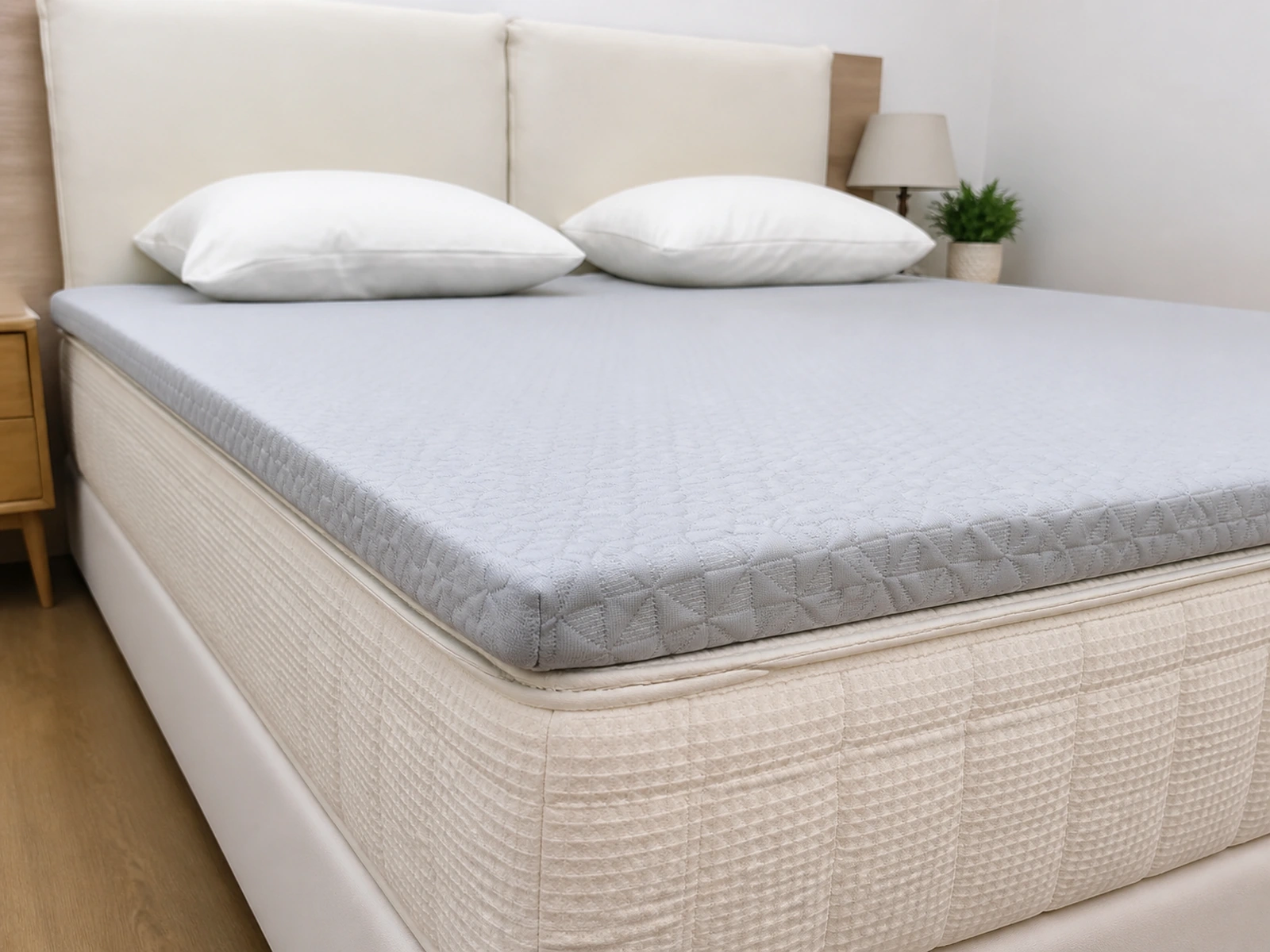
Memory foam topper on memory foam mattress — does that combination actually work? Yes.
Short answer: yes, you can. A memory foam topper on a memory foam mattress can make the surface feel softer and change how the bed feels. But before you buy one, I’d start with a simple question: What exactly feels wrong with your bed right now?
See if any of these sound familiar:
- You recently got a new mattress, but it feels too firm.
- Your bed just doesn’t feel comfortable anymore, and it may even be affecting your sleep.
- Your mattress has developed a dip in the middle after years of use.
- You slept really well at a hotel and came home wishing your own bed felt more like that.
- Or maybe nothing is really “wrong” — you just want your bed to feel a little softer.
Different problems call for different fixes.
One quick clarification: a memory foam mattress and a memory foam topper are not the same thing. We’re talking about adding a thinner comfort layer on top of a full mattress — not stacking two mattresses, and not using a topper by itself as a mattress. If the mattress itself is uncomfortable because of dust, odors, or surface buildup, deal with that first. Our guide to cleaning a mattress at home covers the full routine.
What Exactly Are You Trying to Improve?
Start by figuring out what actually feels wrong. Is the bed too firm, are you sinking in too much, or are you sleeping too hot?
If your new mattress feels too firm: You may want to see if you can exchange it for something softer. I personally prefer a medium-feel memory foam mattress. First, figure out whether the surface just feels too firm or the whole mattress simply isn’t working for you.
If an older mattress suddenly feels uncomfortable: Check for dips or soft spots, then take a look at the bed frame and support underneath. If the underlying support is the problem, adding a topper won’t fix the root cause. If the dip is only slight and mostly affects the surface feel, a thicker topper may help even things out. If you’re wondering whether age is the real problem, see how long memory foam mattresses typically last before trying to fix an aging mattress with another layer.
If you slept really well at a hotel and want that same feeling at home: Don’t rush to buy something just because it’s labeled “hotel-style.” What you liked may have been the mattress, the pillows, the bedding, or simply a plusher top layer.
If your bed feels too soft: That doesn’t automatically mean you need a firm topper on your memory foam mattress. First, figure out whether the surface simply feels too soft or the mattress itself is providing uneven support.
Memory Foam Topper on Memory Foam Mattress: What Changes?
Once you add a topper to a memory foam mattress, the topper becomes the first layer you feel, but the mattress underneath is still doing part of the work. The final feel of the bed comes from both layers together.
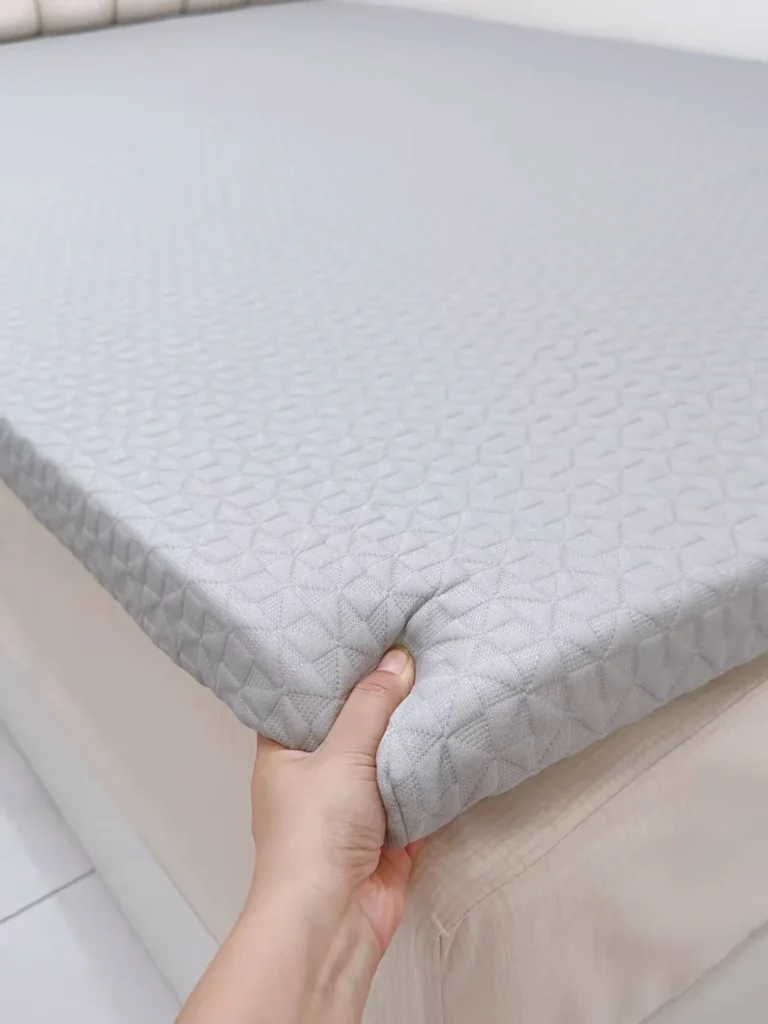
Memory foam slowly molds to your body and takes a little time to bounce back. If you like that cradled feeling, another layer may feel more comfortable. If you already dislike the feeling of sinking into your mattress, be more careful about adding more memory foam.
Firmness is still personal. If you’ve slept well on a softer hotel bed and woke up feeling comfortable the next morning, that may be a sign that you’ll be comfortable with a softer topper too.
What Kind of Memory Foam Topper Should You Choose?
First, think about how much you actually want to change the feel of your bed. Then consider your sleeping position, body type, and how easy it is for you to move around during the night.
- If you usually sleep on your side: Pay attention to how your shoulders and hips feel, but also make sure your hips aren’t sinking too deeply.
- If you sleep on your back or stomach: Pay more attention to how your torso and hips are supported. A topper can feel soft when you press it with your hand and still feel completely different once you lie on it.
- If turning over or getting out of bed is already difficult: Think about the slow response of memory foam, how the edge of the bed feels when you sit on it, and the total height of the bed. If you share the bed, your partner’s comfort matters too.
When choosing a topper for a memory foam mattress, look at thickness and firmness together. Here are two common thicknesses to use as a starting point — not a rule everyone needs to follow.
|
Common Thickness |
How to Think About It |
What Else to Check |
|
2 inches (about 5.1 cm) |
Within the same product line and a similar firmness level, a 2-inch topper can be a useful option when you want a smaller change in how the bed feels. |
Ask whether you really need that much extra cushioning. A thinner topper can still feel very soft, and thinner doesn’t automatically mean more supportive. |
|
3 inches (about 7.6 cm) |
If you want a more noticeable change in the surface feel, compare a 3-inch option with a thinner one. |
Consider whether the added thickness could create more sink, raise the bed too much, or make it harder to move around. Thicker isn’t automatically better. |
If you’ve already decided that a memory foam topper makes sense for you, check three more things before you buy:
Trial and return policy. Can you return it after sleeping on it? Are there any return fees? For a topper, those details are often more useful than simply looking at the length of the warranty.
Size and fit. Don’t rely on the size name alone. Measure the length and width of your mattress, then make sure common sizes such as Twin, Full, or Queen will actually fit. Also check the total height of the mattress once the topper is added.
The total cost. If your current fitted sheet and mattress protector still fit, keep using them. Buying a topper doesn’t mean you need to replace the rest of your bedding too.
What If You Don’t Want to Add More Memory Foam?
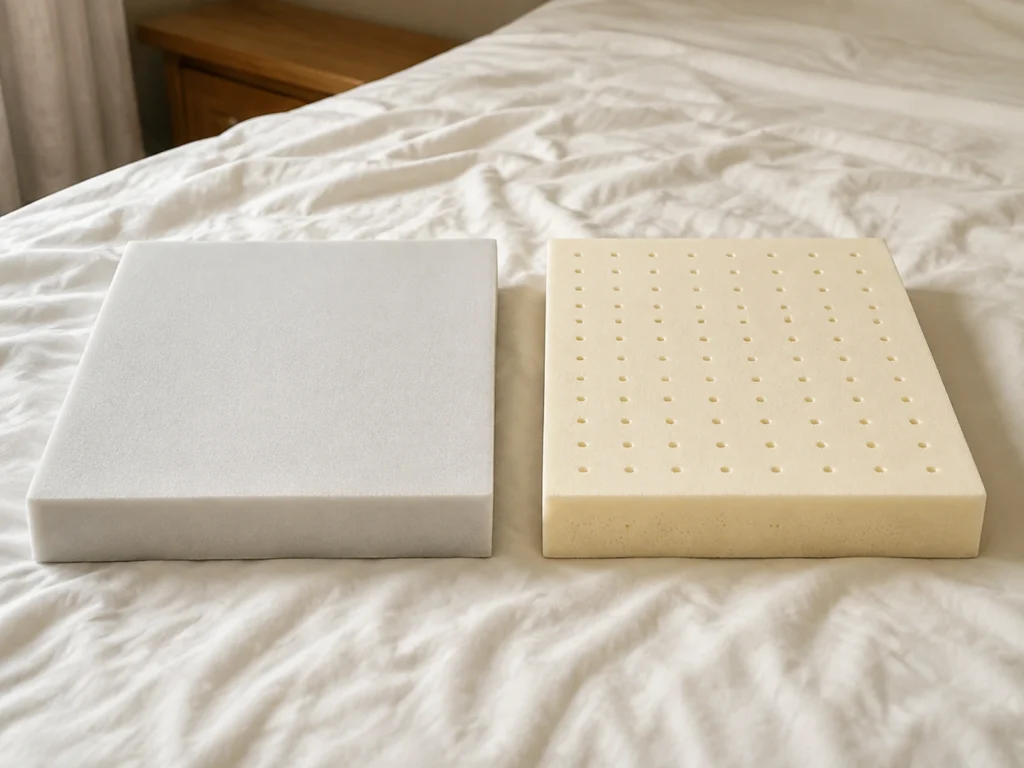
If you don’t like the slow response of memory foam, you can also consider latex or regular polyfoam. Just because your mattress is made with memory foam doesn’t mean the topper has to be memory foam too.
Memory Foam
Slowly contours to your body and has a slower response. It makes the most sense if you want to keep that familiar cradling feel while adding a little more cushioning.
Some options may increase sink and warmth. If you don’t like slow-response foam, pay close attention to this.
Latex
Usually responds more quickly and feels more buoyant. It’s worth comparing if you don’t like the feeling of sinking too deeply into the bed.
Latex comes in different firmness levels. It isn’t automatically cooler or firmer, and not everyone likes the springier feel.
Polyfoam
Firmness and response can vary a lot. It’s worth considering if you want a foam option without the slow response of memory foam.
A “high-density foam” label alone doesn’t tell you enough. You still need to check the construction, cover, and return policy.
Material
What It Feels Like
Trade-Offs to Consider
Memory Foam
Latex
Polyfoam
Slowly contours to your body and has a slower response. It makes the most sense if you want to keep that familiar cradling feel while adding a little more cushioning.
Usually responds more quickly and feels more buoyant. It’s worth comparing if you don’t like the feeling of sinking too deeply into the bed.
Firmness and response can vary a lot. It’s worth considering if you want a foam option without the slow response of memory foam.
Some options may increase sink and warmth. If you don’t like slow-response foam, pay close attention to this.
Latex comes in different firmness levels. It isn’t automatically cooler or firmer, and not everyone likes the springier feel.
A “high-density foam” label alone doesn’t tell you enough. You still need to check the construction, cover, and return policy.
Adding a latex topper to a memory foam mattress mainly changes the feel of the top layer. If you prefer a quicker, more responsive feel, you can look at latex toppers in different firmness levels. Like any topper, the only real way to know whether you like it is to sleep on it.
If you only want a little more softness and something that’s easier to clean, a mattress pad may be enough. You may not need a thick topper at all.
For a small boost in softness, a washable mattress pad can be the simpler option. If you already have one that works well, keep using it. There’s no need to buy a topper, pad, and protector just for the sake of adding more layers.
How Do You Know If You Chose the Right Topper?
After sleeping on the topper for a few nights, go back to the problem you were trying to fix in the first place. Ask yourself whether it actually feels better:
My answer is still yes — you can put a memory foam topper on a memory foam mattress. But first, be clear about what you’re trying to change. If you want a softer bed, think about cushioning and how much you’ll sink in. If you don’t like slow-response foam, don’t limit yourself to memory foam. And if the mattress itself is the problem, figure that out before adding another layer.
The right topper can be a simple adjustment. The wrong one can just give you another problem to solve.