Brown Noise vs White Noise for Sleep: What’s the Difference?
We may earn a commission from affiliate links to products on this page, at no additional cost to you. Learn more.
If white noise has ever sounded a little too sharp or hissy when you’re trying to sleep, brown noise may feel noticeably different. When comparing brown noise vs white noise for sleep, the simplest difference is how they sound: white noise is brighter and steadier, while brown noise is deeper and softer.
So, is brown noise better than white noise for sleep? Not necessarily. If white noise already fades into the background for you, there’s no reason to switch. But if its hiss keeps grabbing your attention, brown noise may be worth trying.
The more useful question is simple: Which sound is easier for you to stop noticing? This guide will help you decide which one may be worth trying first.
Brown Noise vs White Noise for Sleep: Which Should You Try?
Here’s the quick answer before we get into the details.
⚡ The 10-Second Version
|
🤍 White Noise |
🟤 Brown Noise |
|
|---|---|---|
|
Sounds like |
Brighter, steady “shhh” |
Deeper, softer rumble |
|
Overall feel |
Crisp, even, hissier |
Warmer, fuller, bassier |
|
Frequency character |
Flatter spectrum |
More emphasis on low frequencies |
|
You may prefer it if… |
You already like fan-like or classic sound-machine noise |
White noise feels too sharp or hissy |
|
For sleep? |
Worth trying |
Worth trying |
|
Clear winner? |
No |
No |
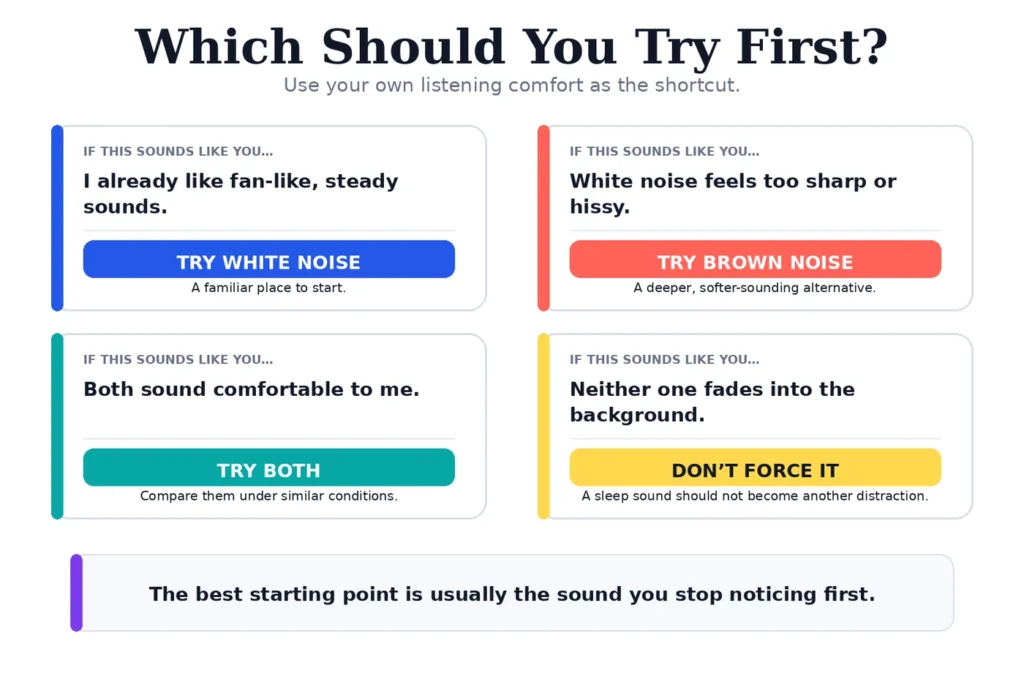
🤍 Try White Noise First If…
You already like fan-like sounds.
If a fan, air purifier, or traditional sound machine feels familiar rather than distracting, white noise is an easy place to start.
The brighter hiss doesn’t bother you.
If you stop noticing it after a few minutes, that’s a good sign.
Your room has unpredictable background noise.
A steady white-noise background may help sudden sounds stand out less.
🟤 Try Brown Noise First If…
White noise feels too sharp.
If the hiss keeps grabbing your attention, try something deeper.
You naturally prefer deeper sounds.
Some people simply find a deeper, bassier background easier to ignore.
You prefer a softer sound with less hiss.
If white noise starts becoming the distraction, brown noise is worth a try.
Still not sure? Try white noise one night and brown noise the next. Keep the volume and bedroom setup similar, then ask yourself one question: Which sound was easier to forget was playing?
The practical test: the outside noise should become less noticeable without the sound you’re using becoming a new distraction.
Why Do White Noise and Brown Noise Sound Different?
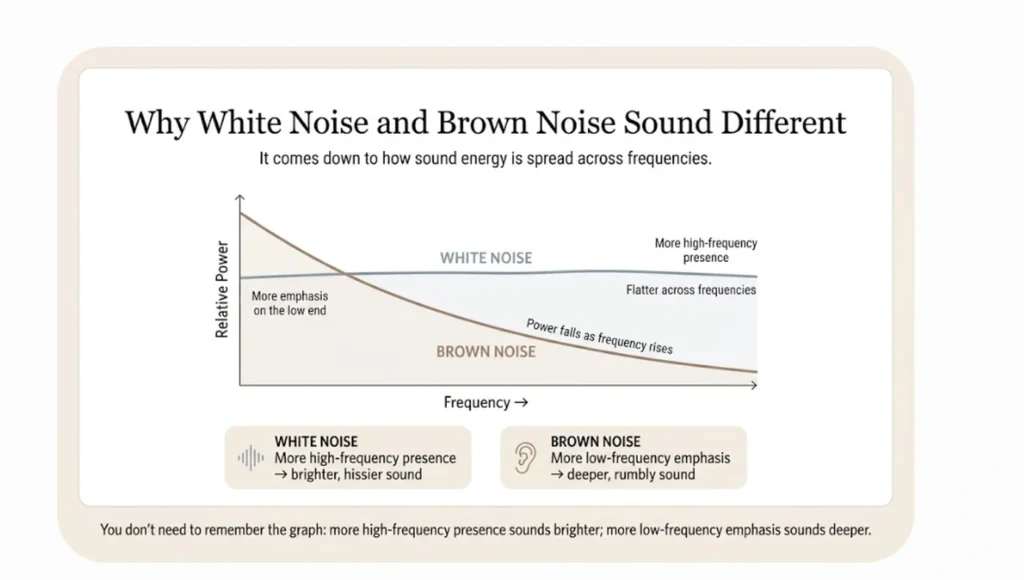
White noise and brown noise both cover a broad range of sound frequencies. The main difference is how that sound energy is spread out—and your ears can hear the difference pretty quickly.

What Is White Noise?
White noise has a relatively flat power spectrum, which gives it that bright, steady “shhh” sound. If you already like the sound of a fan or air purifier, it may feel familiar.
That steady background can also make sudden sounds—like traffic, a door closing, or someone talking nearby—stand out less. It doesn’t erase the noise; it simply makes the change feel less obvious.

What Is Brown Noise?
Brown noise puts more emphasis on lower frequencies, so it sounds deeper, fuller, and less hissy than white noise. If white noise feels a little sharp to you, brown noise may simply be easier on your ears.
That doesn’t automatically make brown noise better for sleep. Some people prefer it, but current research still hasn’t shown that brown noise improves sleep more than white noise.
The Simple Difference
More high-frequency presence → brighter sound
More low-frequency emphasis → deeper sound
What Does Research Say About Brown Noise and White Noise for Sleep?
Here’s the short version: white noise has more sleep research behind it, but the results are mixed. Brown noise is popular, but direct research on brown noise for sleep is still limited.
That doesn’t mean white noise can’t help. Some people may find it useful, especially when outside noise is part of the problem. It just means we shouldn’t promise that it works for everyone.
And brown noise? It may feel more comfortable if you prefer deeper sounds, but there still isn’t good evidence that it helps you sleep better than white noise.
The takeaway: There isn’t one scientifically proven “best” noise color for sleep. Start with the one that feels comfortable and is easiest to stop noticing.
How to Use Brown or White Noise at Night
Once you’ve picked a sound, keep the setup simple. The goal is to let it fade into the background—not turn it into the loudest thing in your bedroom.

Keep It Low and Comfortable
Start with the lowest volume that makes the unwanted noise less noticeable. If the white or brown noise itself keeps grabbing your attention, turn it down.
There isn’t one perfect bedtime volume for everyone. A simple rule is better: keep it comfortable and avoid playing sound loudly for long periods.
Give the Speaker Some Space
You don’t need the speaker or sound machine right beside your head. Give it a little space so the sound can sit in the room rather than firing directly toward your ear.
And if you only need background noise while falling asleep, try a timer. If the noise you’re covering continues all night, low-level playback may make more sense. There’s no need to overthink it.
App, Speaker, or Sound Machine?
You don’t need to buy anything just to find out whether you like white or brown noise.
📱 Try an app first if you’re still figuring out which sound you prefer.
🔊 Use a speaker if you want the sound to fill the room instead of playing directly in your ears.
💤 Consider a sound machine if you already know you like background noise and want easy bedside controls, timers, and several sound options without relying on your phone.
Tip: If you end up using background noise most nights, a sound machine with both white and brown noise is usually more convenient than reaching for your phone every night.
One more thing: If sleep problems are happening regularly or affecting how you feel during the day, background noise shouldn’t be your only solution. It may be worth talking with a healthcare professional.
Brown Noise vs White Noise FAQ
Is brown noise or white noise better for sleep?
There isn’t a proven winner. White noise has more sleep research behind it, while brown noise may simply feel more comfortable if you prefer deeper sounds. For everyday use, start with whichever one is easiest to stop noticing.
What is the main difference between brown noise and white noise?
White noise sounds brighter and hissier, while brown noise sounds deeper and bassier. The difference comes from how their sound energy is spread across frequencies.
The easy version? White noise goes “shhh.” Brown noise goes “rrrr.”
Can you listen to brown or white noise all night?
You can, but all-night playback isn’t necessary for everyone. If you leave white or brown noise playing overnight, keep the volume comfortably low. If you only need it while falling asleep, a timer may be enough.
The Bottom Line
White noise is brighter. Brown noise is deeper. Neither one is the best sleep sound for everyone.
If one makes outside noise less noticeable and then fades from your attention too, that’s probably the one worth keeping. Sometimes the best sleep sound is simply the one you forget is playing.

